
The door has become loud, grinding or shaky
Noise is wear you can hear. It is also the cheapest stage to fix — most of what makes a door loud is a part that costs little and is about to take something expensive with it.
Phones answered around the clock · free estimate
While you wait — please don't
- A sudden new noise is different from gradual rumble — a bang, a scrape or a pop means stop and get it looked at.
- Do not grease the track. The rollers are meant to roll along it, not slide through grease, and grease collects grit.
What has probably happened
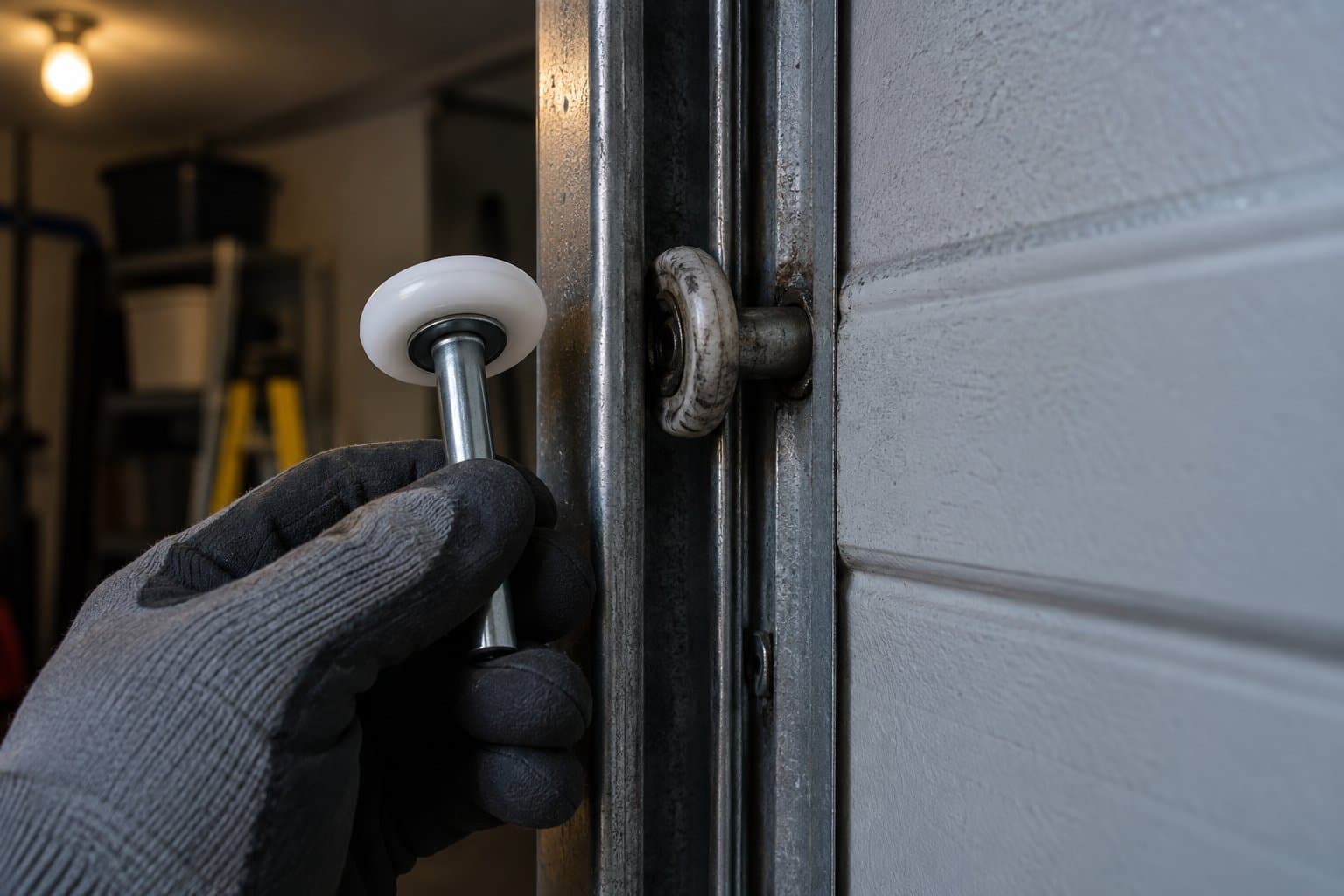
- Worn rollers, especially the cheap plastic ones fitted on most builder-grade doors.
- Dry or loose hinges and bearings.
- Bolts and brackets that have worked loose from years of vibration.
- The door is out of balance, so the opener is straining against its weight.
- A chain that has stretched and slaps as it runs.
What the technician does
- Rollers replaced — nylon rollers are dramatically quieter than steel or plastic.
- Hinges, bearings and the shaft serviced and anything worn replaced.
- All hardware retightened to spec.
- Balance restored and the opener's force reset.
- Chain tensioned or a belt drive fitted where quiet really matters, such as a bedroom over the garage.
Questions people ask
- Is a noisy door dangerous?
- Not usually on its own, but it is the warning stage. Worn rollers and loose hardware are what put doors off track later, and that is a far bigger repair.
- Can you make it quiet enough for the room above?
- Usually yes. Nylon rollers, serviced hinges and a belt-drive opener between them take out most of what people hear through the ceiling.
Get a technician out
Free estimate. The price is agreed before the work starts.
Something else going on?
- Loud bang, door won't lift
- Door won't open or close
- Door is off its track
- Opener or remote dead
- Stuck half open
- Cable snapped or loose
- Dented or damaged panel
- I want a new door
One Call Garage Door arranges the visit; the technician does the work and gives you the price.