
Stop using the door
Cable snapped in Jacksonville, FL
There is a cable hanging loose and the door sits crooked. One side dropped, the other side stayed up, and the whole door looks twisted in the opening. That is a broken lift cable. The cable carries the weight of the door on that side, and when it lets go, the spring tension above it is still loaded and the door is now hanging wrong.
Phones answered around the clock · free estimate
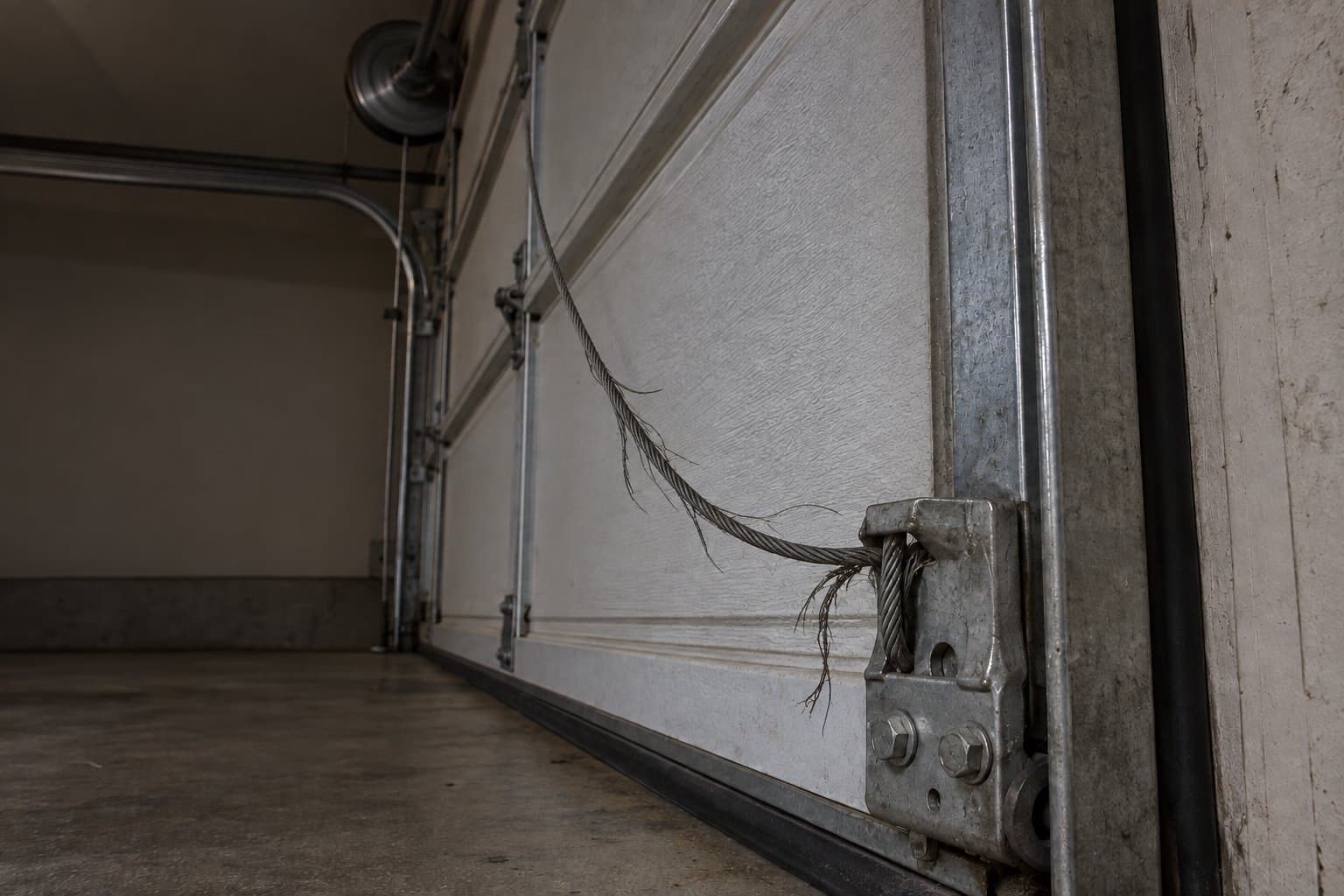
In Jacksonville this often starts at the drum. Salt air off the Atlantic and the tidal St. Johns River reaches hardware well inland, and high year-round humidity keeps springs, hinges and cable drums damp. Rust builds where the cable winds, the strands fray, and one day the cable parts. It happens in the old wood-frame and masonry homes in Riverside, Avondale and Springfield just as it does in the newer block and stucco subdivisions on the Southside and Northside.
While you wait — please don't
- Stop using the door. A crooked door under tension is the most dangerous state a garage door gets into, so do not open or close it again, by opener or by hand.
- Do not pull on the hanging cable. That cable is still connected to loaded hardware and can move suddenly with real force.
- Do not try to fix it yourself. Cables, drums and springs are all under tension at the same time, and releasing one wrong is how people get badly hurt.
- Do not force the opener. Running the opener on a door that is off level can twist the panels, pull the door sideways out of the track, or break the second cable too.
- Keep people and cars clear. If a car is shut inside, leave it there until a technician has looked at the door rather than trying to lift it out of the way.
What the technician does
- The door gets looked at firstThe technician checks how the door is sitting, where the broken cable failed, and whether the drums, springs or track took damage when it let go. Nothing is quoted before that look.
- Cables replaced in pairsBoth cables get replaced, not just the one that snapped, because the other one has lived the same life in the same humid air. They are sized to your door height.
- Drums re-seated and re-setThe drums are put back and set so both sides wind evenly. If rust at the drum is what chewed the cable up, that gets addressed rather than left to do it again.
- Springs checked at the same timeSprings and cables share the load, so the springs get inspected while the door is apart. A tired spring found now saves a second failure later.
- Door re-squaredThe door is brought back level in the opening so it is not riding crooked in the tracks.
- Cycle testedThe door is run up and down and watched, so you can see it moving straight and even before anyone leaves.
Why this happens in Jacksonville, FL
Corrosion is the theme here. Jacksonville sits on the Atlantic coast with the tidal St. Johns River running through it, and salt-laden air shortens the life of springs, rollers, cables and the drums they wind on. Add near-daily afternoon thunderstorms in summer and high humidity all year, and hardware simply does not stay dry. Galvanized or coated hardware and regular lubrication matter more here than they do inland. Northeast Florida also gets several freezes each winter, and a cold snap is hard on a door whose moving parts have gone dry.
The housing stock cuts both ways. Early-1900s wood-frame and brick homes in the historic riverfront districts often have older, smaller doors and older hardware, while the 1990s-and-newer stucco and block subdivisions on the Southside, in Mandarin, Baymeadows and Bartram Park mostly run two-car double doors that are heavy and put real load on a pair of cables. Demand also climbs around Atlantic hurricane season from June through November, both before storms when people upgrade and after, when wind-borne debris and wind-driven rain leave doors damaged. If a cable went in that window, get it looked at rather than nursing the door along.
Questions people ask
- Can I use the door once, just to get my car out?
- No. A door hanging crooked with a broken cable is the most dangerous state a garage door gets into, and running it can pull the door off its track or snap the second cable. Leave it alone and have it looked at.
- Why replace both cables when only one broke?
- The two cables are the same age and have been sitting in the same humid, salt-laden Jacksonville air. Replacing them in pairs and sizing them to your door height keeps both sides winding evenly, which is the whole point of the repair.
- Does the salt air really reach my house? I'm not at the beach.
- Salt off the Atlantic and the tidal St. Johns River affects hardware well inland in Jacksonville, not just in Jacksonville Beach or Atlantic Beach. Rust at the drum is a common cause of cable failure across the city, from Ortega and Murray Hill out to Arlington and the Northside.
- Do I need a permit for a cable repair?
- In Florida a permit is typically required to replace a garage door, since the door is part of the building envelope and must meet Florida Building Code. Permits are issued locally, so if the conversation turns from repair to replacement, check with the Jacksonville-area building department that covers your address.
- Are you the company doing the work?
- No. One Call Garage Door is a referral and scheduling service that arranges garage door service with independent local technicians. We are not the contractor and we do not perform the work ourselves.
- What does it cost?
- The estimate is free. The technician looks at the door in person, gives you the price before any work starts, and you approve it first.
One call
One call to (866) 394-4210 gets cable repair arranged with an independent local technician in Jacksonville. The estimate is free, and the price is agreed with you before any work starts.
Something else in this area
- Door is off its track
- Opener or remote dead
- Stuck half open
- Loud bang, door won't lift
- Door won't open or close
One Call Garage Door arranges the visit; the technician does the work and gives you the price.