
Stop using the door
Broken spring in Jacksonville, FL
You heard a bang, and now the door will not lift. That is almost always a broken spring. The springs above or beside the door carry the weight of the whole thing, and when one snaps, the door suddenly weighs what the springs were carrying. The opener may grind, strain, or do nothing at all. Leave it where it is and call (866) 394-4210.
Phones answered around the clock · free estimate
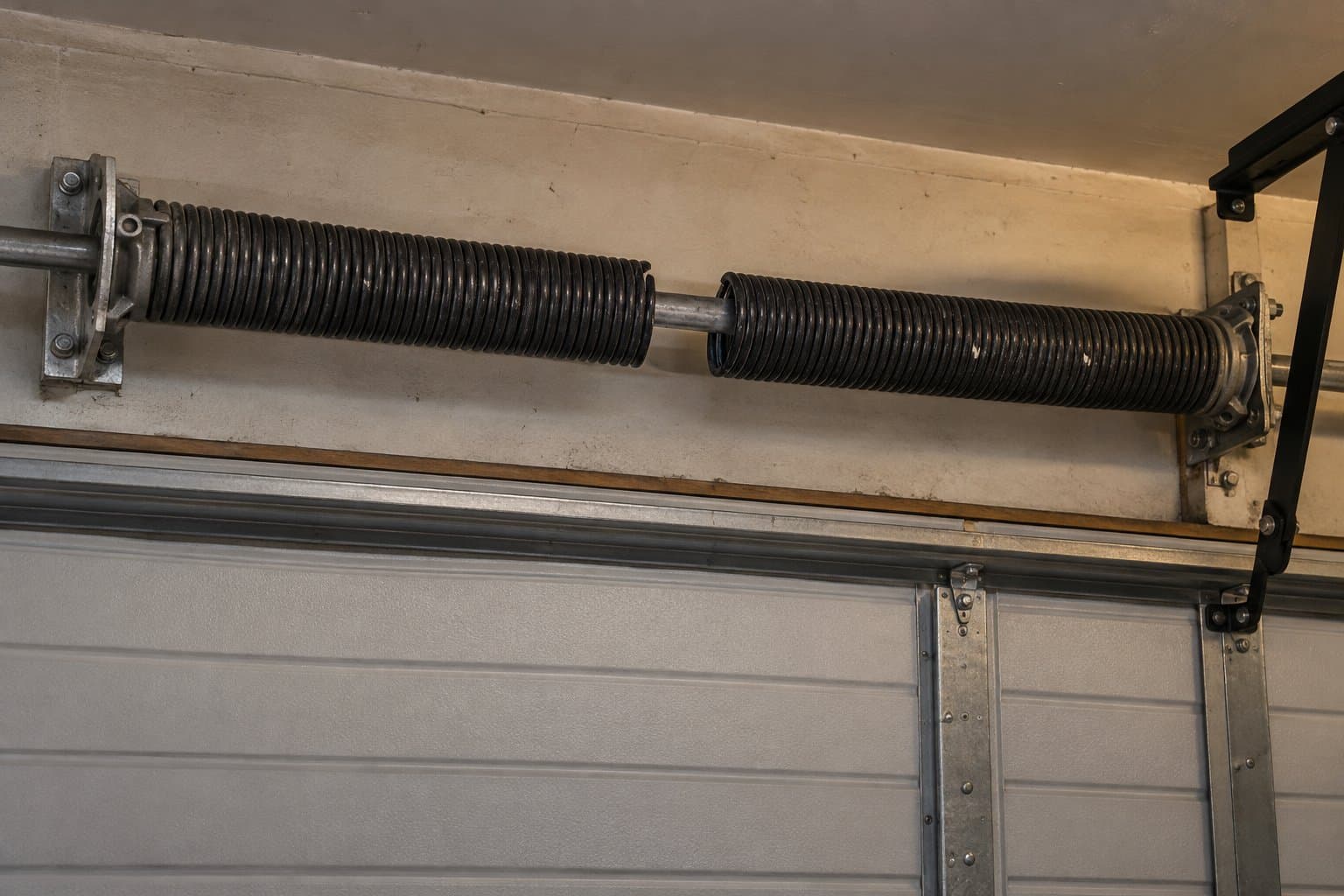
Springs do not fail on a schedule. Cycle life decides it, not age, so a Jacksonville household that runs the door in and out many times a day gets through springs faster than a neighbor who barely uses it. The climate does not help. Constant heat and high humidity rust springs, hinges, rollers and fasteners here, and salt air off the Atlantic and the tidal St. Johns River shortens the life of that hardware well inland. Then a winter cold snap comes through northeast Florida and finishes off a spring that was already fatigued.
While you wait — please don't
- Stop using the door. With a broken spring the door is unbalanced and can drop, so stop opening and closing it until a technician looks at it.
- Do not force it up by hand. People injure themselves trying to lift a door that now weighs what the springs were holding.
- Do not touch the torsion springs. Torsion springs are under extreme tension and must not be touched or adjusted by anyone without the right tools and training.
- Do not keep hitting the opener button. The opener was never built to lift the raw weight of the door, and running it against a broken spring can damage the unit and the door.
- Do not park under it. If your car is still inside, leave it and let the technician deal with the door first rather than easing the car out under a loaded door.
What the technician does
- The door gets weighed and measuredSprings are sized to the weight of the door, not guessed at. The technician checks what you actually have before anything is ordered or fitted.
- Springs are replaced in pairsTorsion and extension springs are replaced in pairs. The surviving spring has the same cycles on it as the one that broke, so replacing only one usually means a second call later.
- Cables, drums and bearings are checkedA spring rarely fails alone. Cables, drums and bearings get inspected at the same time, which matters in a salt-air city where corrosion is constant.
- The door is rebalancedOnce the new springs are on, the door is balanced so it holds position instead of dropping or drifting up. A balanced door is easier on the opener too.
- The opener safety reverse is testedThe technician tests the safety reverse before leaving so the door stops and backs off when something is in the way.
- You see the price firstThe estimate is free. The technician looks at the door and gives you the price, and you approve it before any work starts.
Why this happens in Jacksonville, FL
Jacksonville is hard on garage door hardware in a way inland cities are not. The Atlantic coastline and the St. Johns River put salt-laden air over homes across the city, and corrosion on tracks, rollers and springs is a constant maintenance issue rather than a one-off. Add near-daily afternoon thunderstorms and high year-round humidity, and steel parts rust faster than the owners expect. Galvanized or coated hardware and regular lubrication genuinely matter here, and a lubricant-starved mechanism is more likely to give up during one of the several freezes northeast Florida sees each year.
The housing stock varies a lot across one city, and so do the doors. Early-1900s wood-frame and brick homes in Riverside, Avondale, Ortega and Springfield sit alongside mid-century concrete-block ranches and a large share of 1990s-and-newer stucco and block subdivisions on the Southside, Northside, Mandarin and Bartram Park. Detached single-family homes with attached one- and two-car garages dominate, so double doors and the heavier spring sets that go with them are common. Demand tends to spike around Atlantic hurricane season from June to November and again during winter cold snaps. We arrange service across Jacksonville and out toward Jacksonville Beach, Atlantic Beach, Neptune Beach, Ponte Vedra Beach, Orange Park, Fernandina Beach, St. Augustine and Middleburg.
Questions people ask
- Can I just replace the one spring that broke?
- It is not the way this is normally done. Both springs have the same cycles on them, so the second one is usually close behind the first. Springs are replaced in pairs and sized to the weight of your door.
- Why do springs fail so fast in Jacksonville?
- Salt air off the Atlantic and the St. Johns River, plus heat and high humidity, rust springs, cables and hinges well inland. On top of that, cycle life decides when a spring goes, so a busy household gets through them quicker. Cold snaps often finish off a spring that was already fatigued.
- Can I still get my car out?
- Don't try to force the door up by hand. With a broken spring the door carries its full weight and can drop on you or the car. Stop using it and call (866) 394-4210.
- What does it cost?
- We do not quote prices, and the technician will not either until he has seen the door. The estimate is free, and you approve the price before any work begins.
- Are you the company that does the repair?
- No. One Call Garage Door is a referral and scheduling service that arranges garage door service with independent local technicians in all fifty states. We are not the contractor and we do not perform the work; licensing is the technician's own and requirements vary by jurisdiction in Florida.
One call
One call to (866) 394-4210 gets a broken spring in Jacksonville booked with an independent local technician, and the estimate is free. He looks at the door, gives you the price, and you approve it before any work starts.
Something else in this area
- Door is off its track
- Opener or remote dead
- Stuck half open
- Cable snapped or loose
- Door won't open or close
One Call Garage Door arranges the visit; the technician does the work and gives you the price.