
Garage door openers, repaired or replaced
Most opener faults are one worn part, and the opener is worth keeping. Some are not. Here is how to tell what you have, what usually fails, and what replacing it involves.
Phones answered around the clock · free estimate
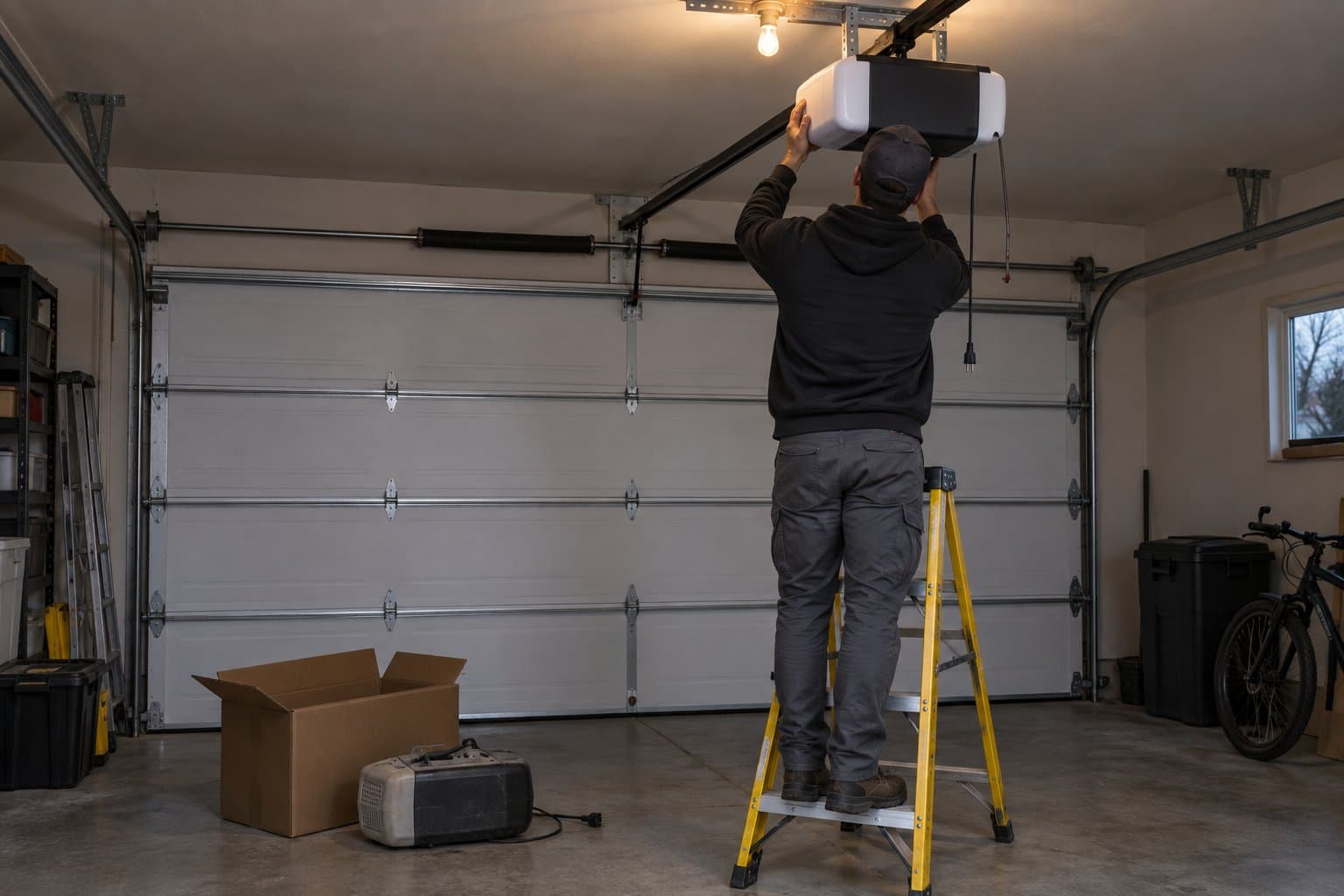
Which opener do you have?
Look up at the ceiling of your garage. What runs between the motor and the door tells you most of it.
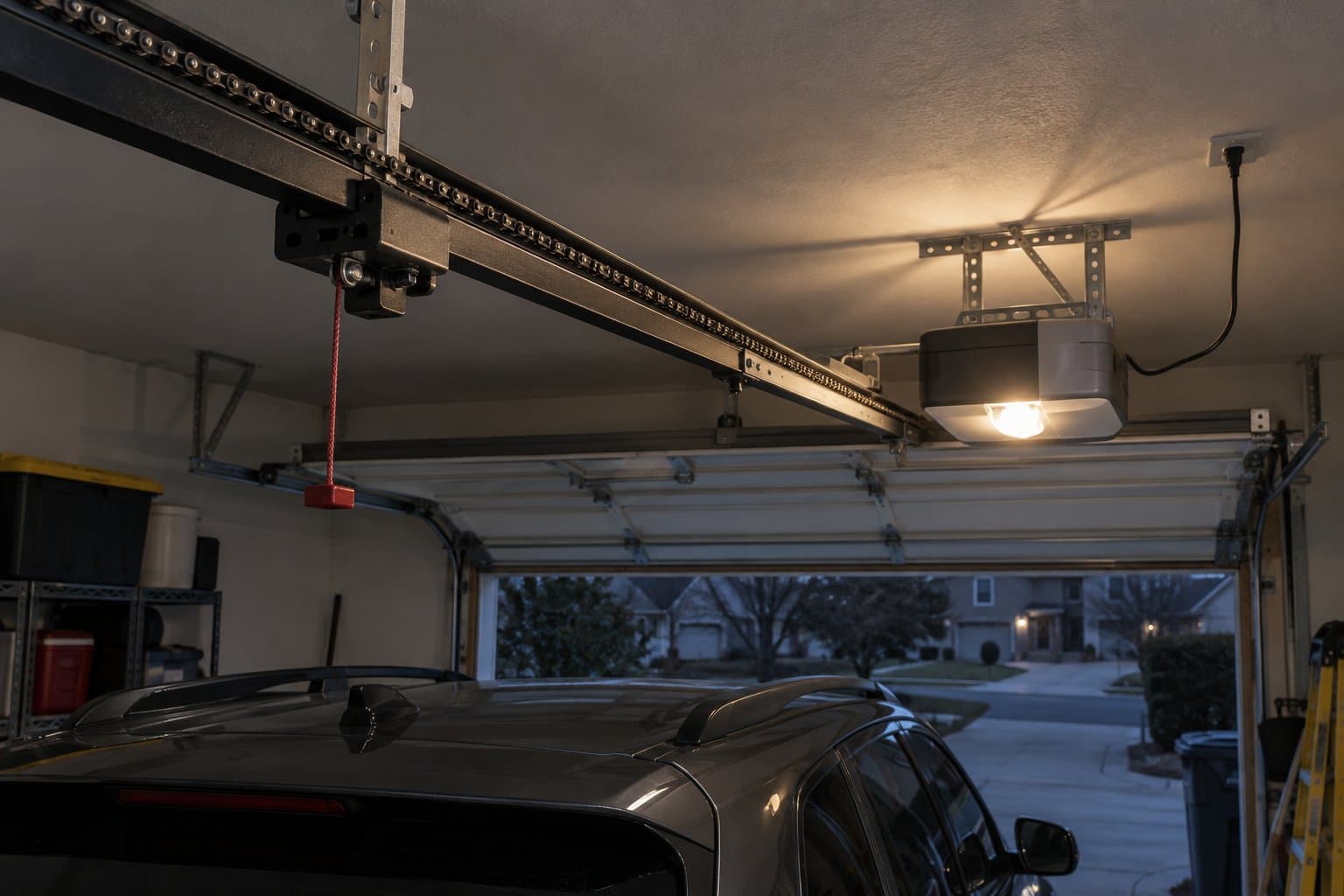
Chain drive
- How to recognise it
- A steel chain, like a bicycle chain, runs along the rail from the motor at the back of the garage to the door.
- What you get
- The most common kind and the simplest. It is strong and it lasts, and you can hear it from the room above the garage.
- What goes wrong
- The chain stretches and starts to slap the rail, and on many units a plastic drive gear inside the motor wears out long before the motor does.
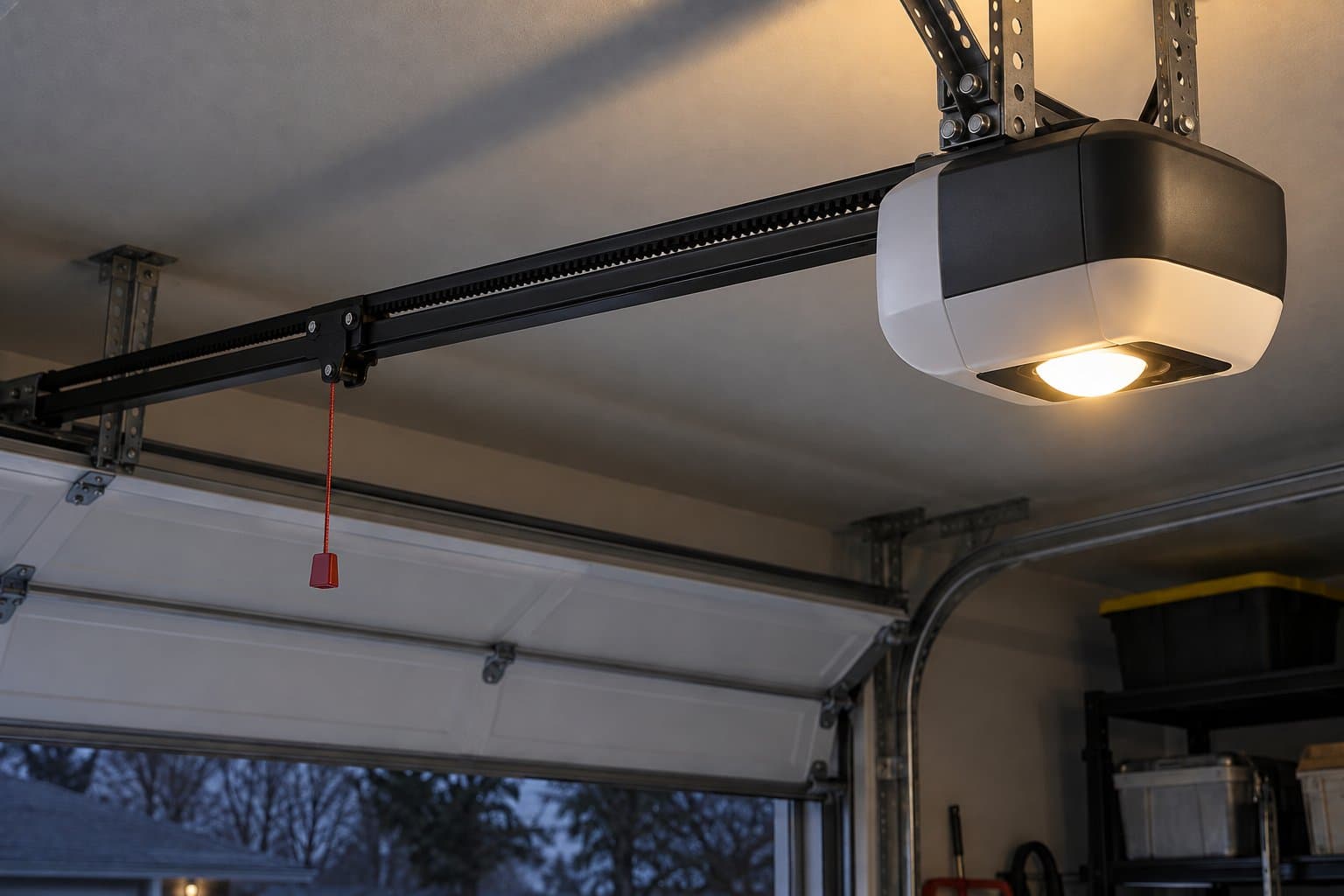
Belt drive
- How to recognise it
- The same rail and motor as a chain drive, but with a flat black reinforced belt where the chain would be.
- What you get
- Much quieter, which is why it is the usual choice when there is a bedroom over the garage.
- What goes wrong
- Belts last well, but they can lose tension or fray with age, and the electronics fail the same way as on any other opener.
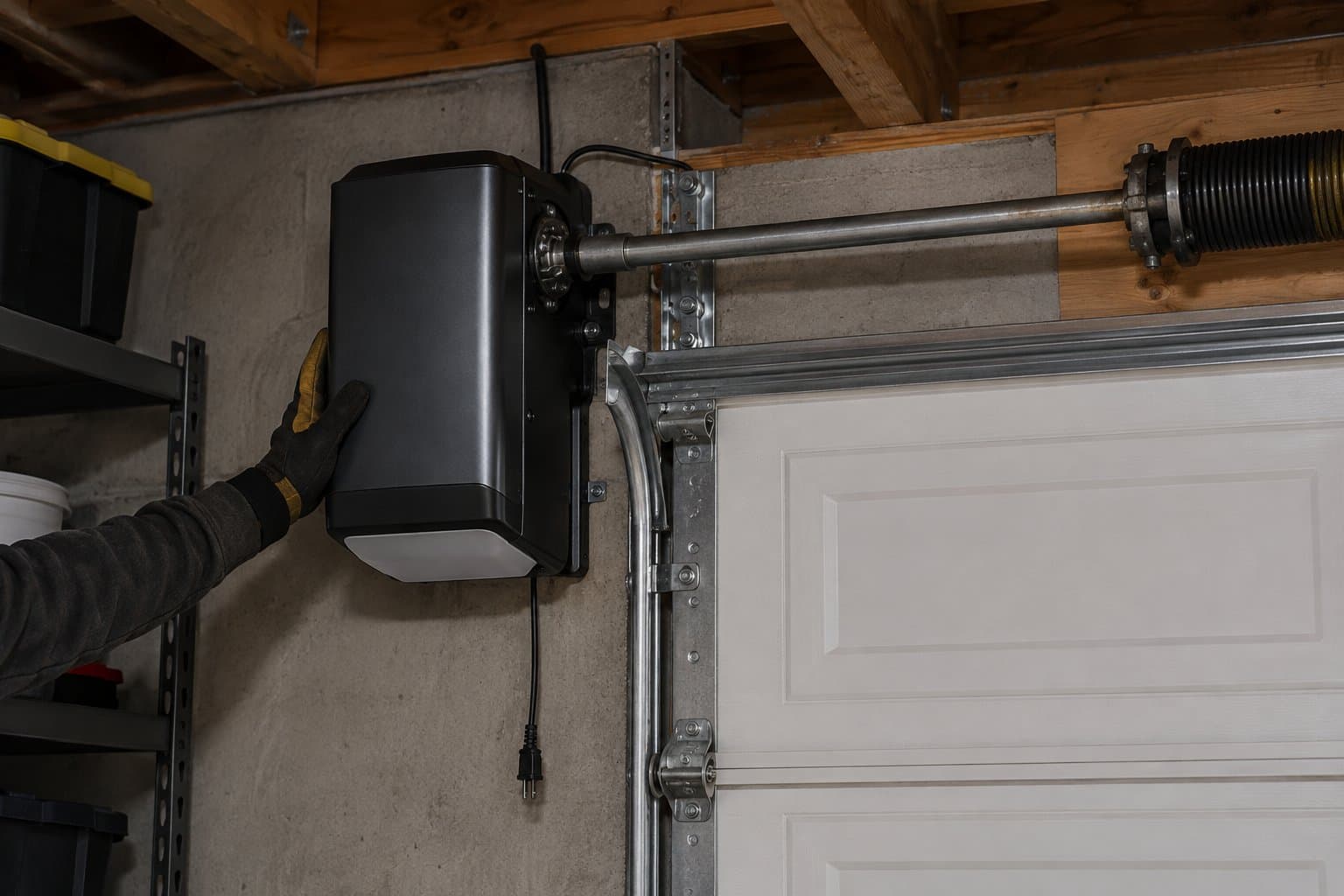
Wall mount
- How to recognise it
- There is no rail across the ceiling at all. A compact motor sits on the wall beside the door and turns the spring shaft directly.
- What you get
- Frees the whole ceiling for storage or a car lift, and suits garages with high or sloped ceilings. It needs a door with a torsion spring and a clear space beside it.
- What goes wrong
- It depends entirely on the door being properly balanced, so a tired spring shows up as an opener fault. It also relies on a cable-tension sensor that has to be set correctly.
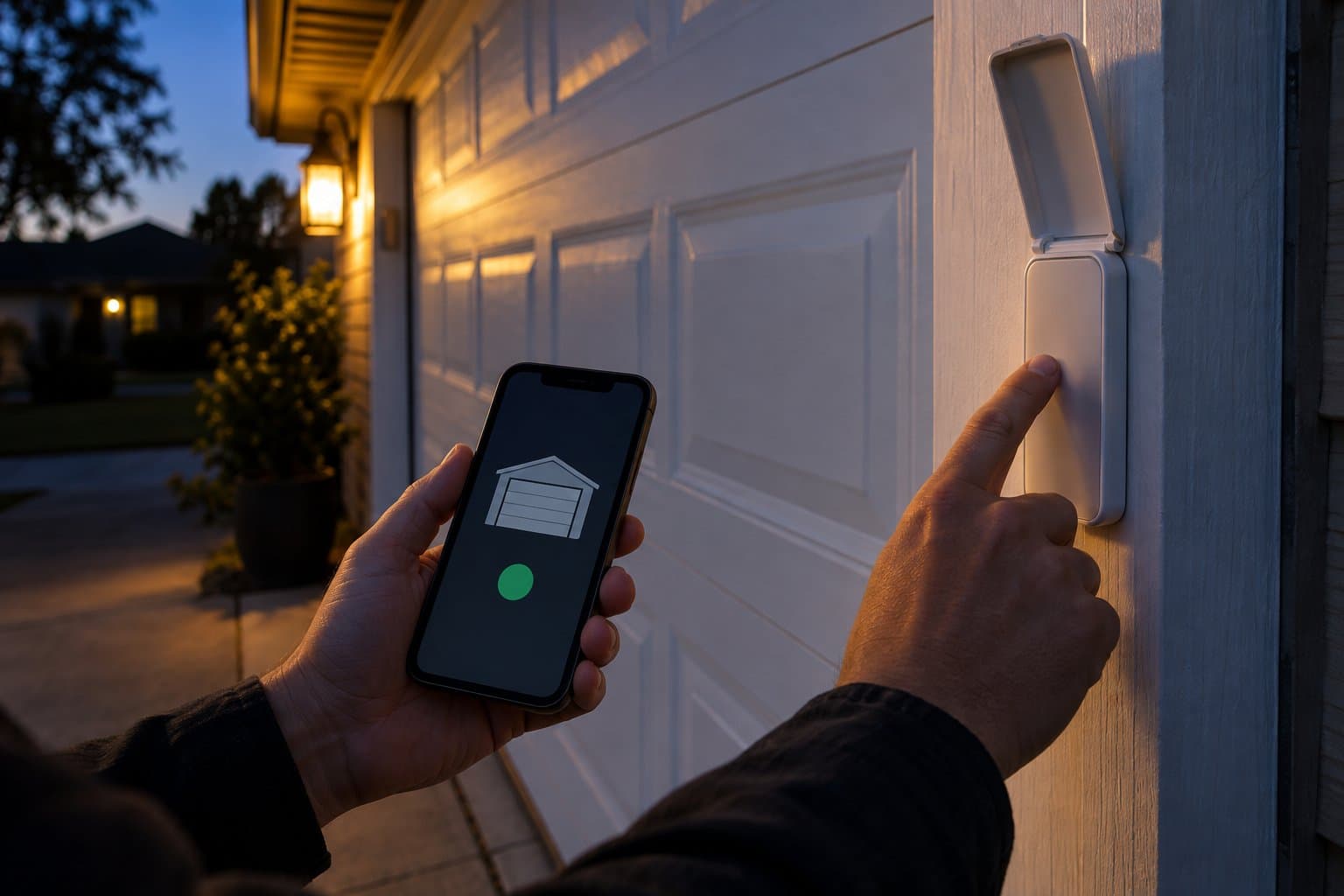
Smart openers and keypads
- How to recognise it
- You open the door from your phone, or the opener has a Wi-Fi light on it. Outside, a keypad on the door frame takes a code.
- What you get
- You can check the door is shut from anywhere and let someone in without handing over a remote. It depends on your home Wi-Fi reaching the garage.
- What goes wrong
- Most problems are the connection rather than the opener: a changed Wi-Fi password, a router that moved, or a keypad with a flat battery.
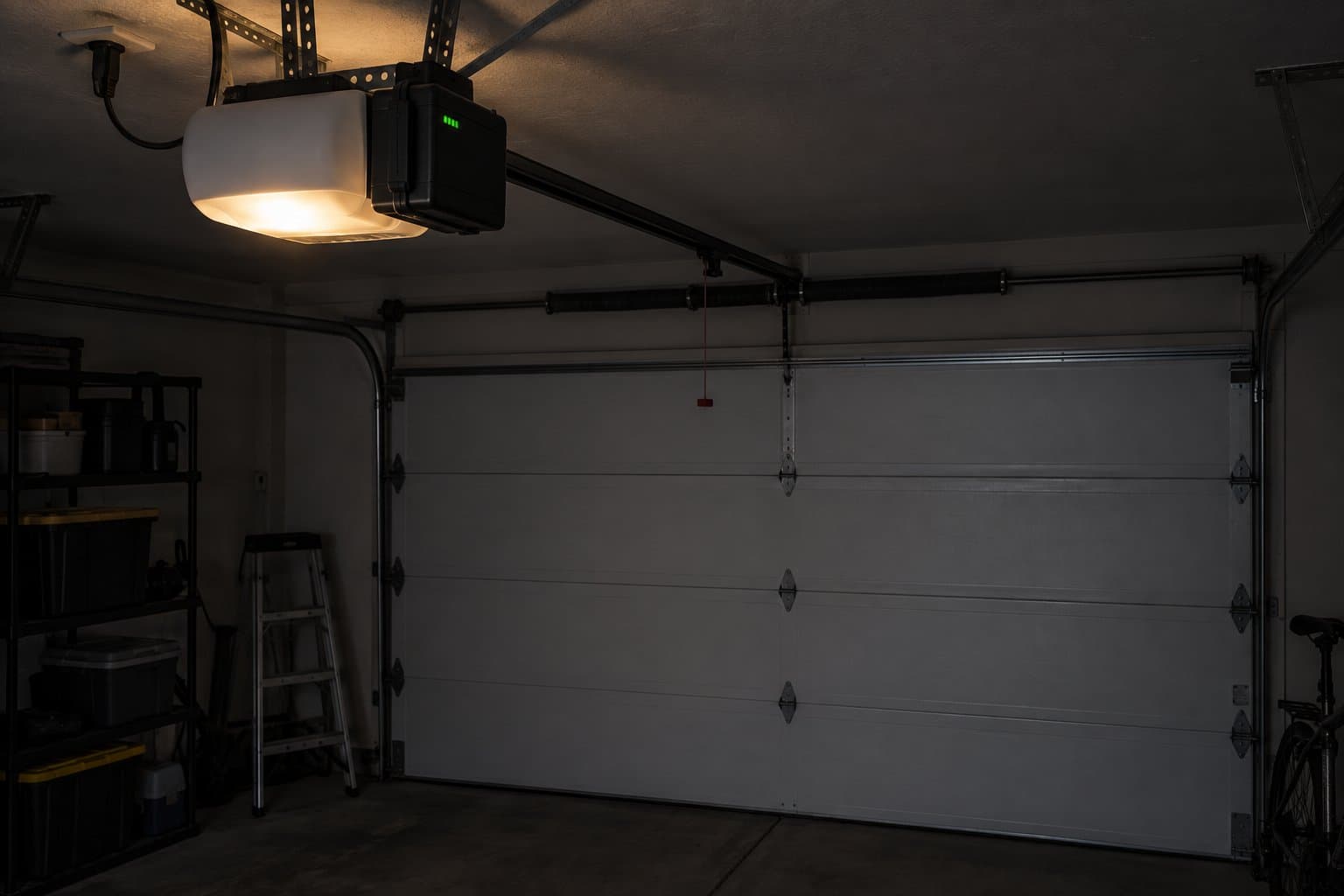
Battery backup
- How to recognise it
- A battery pack on the motor, usually with its own indicator light. Some openers beep when the battery needs replacing.
- What you get
- The door still opens when the power is out. California requires it on new openers; everywhere else it is a choice worth making if outages are common where you live.
- What goes wrong
- The battery is a consumable. A beeping opener after a few years is usually asking for a new battery rather than a new opener.
What usually fails
Four faults account for most opener calls. If your remote has simply stopped working and you want the short version, start with opener or remote dead.
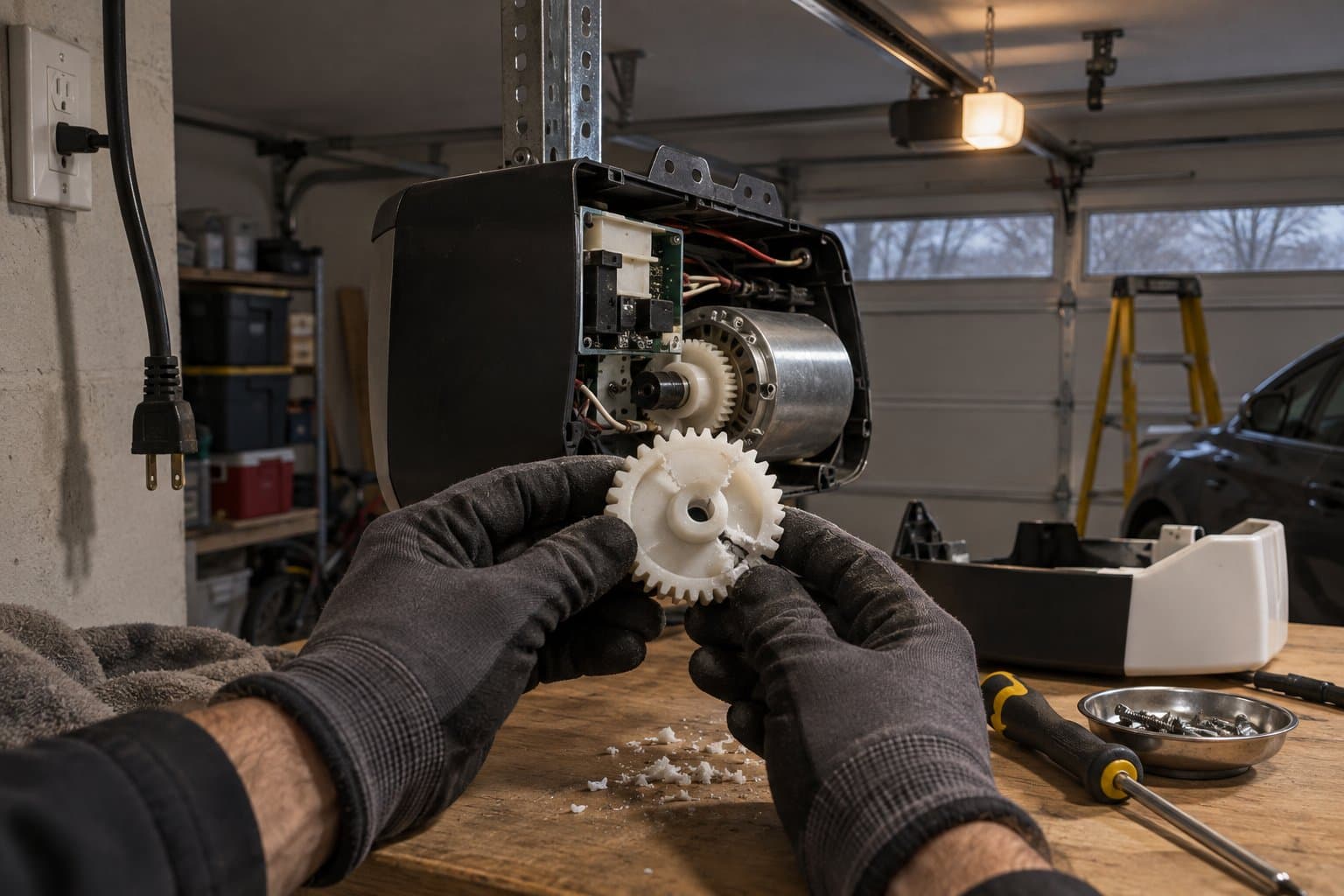
Stripped drive gear
“The motor hums or runs, and the door does not move”
Inside many openers a plastic gear takes the load between the motor and the chain or belt. It is designed to wear out before the motor does, and when it goes you find white shavings inside the case.
Usually a repair. A gear and sprocket kit on an otherwise sound opener is a sensible fix. Stop pressing the button once it starts humming, or the motor follows the gear.
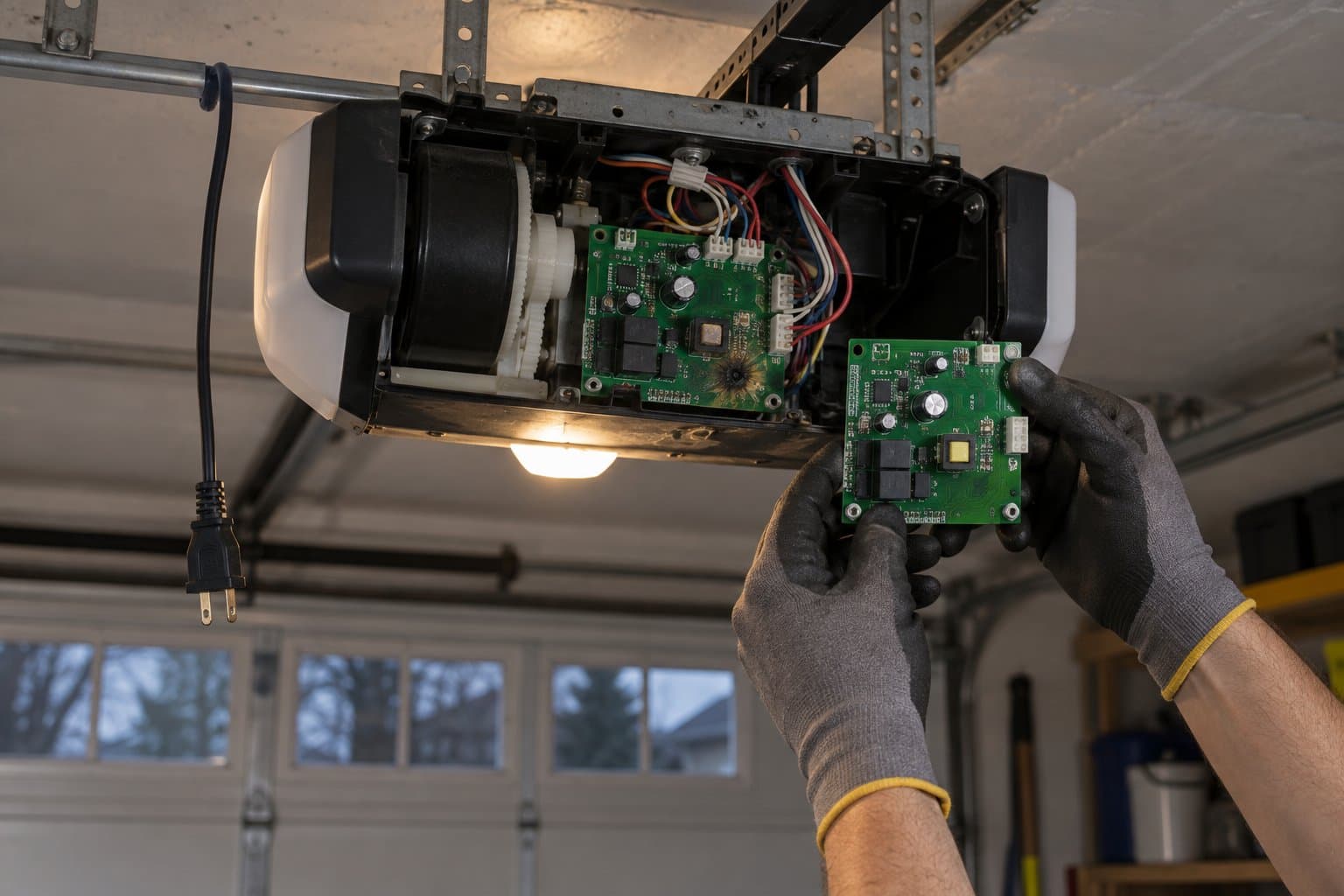
Failed logic board
“Nothing happens at all, or it does something different every time”
The logic board is the opener's brain. Power surges and lightning are what usually kill it, which is why this fault often arrives the morning after a storm.
A board can be replaced where the part is still made. On an older opener the board can cost enough that a new unit is the better use of the money, and the technician will tell you which way it falls.
Remotes and keypads that have stopped pairing
“The wall button works but the remote does not”
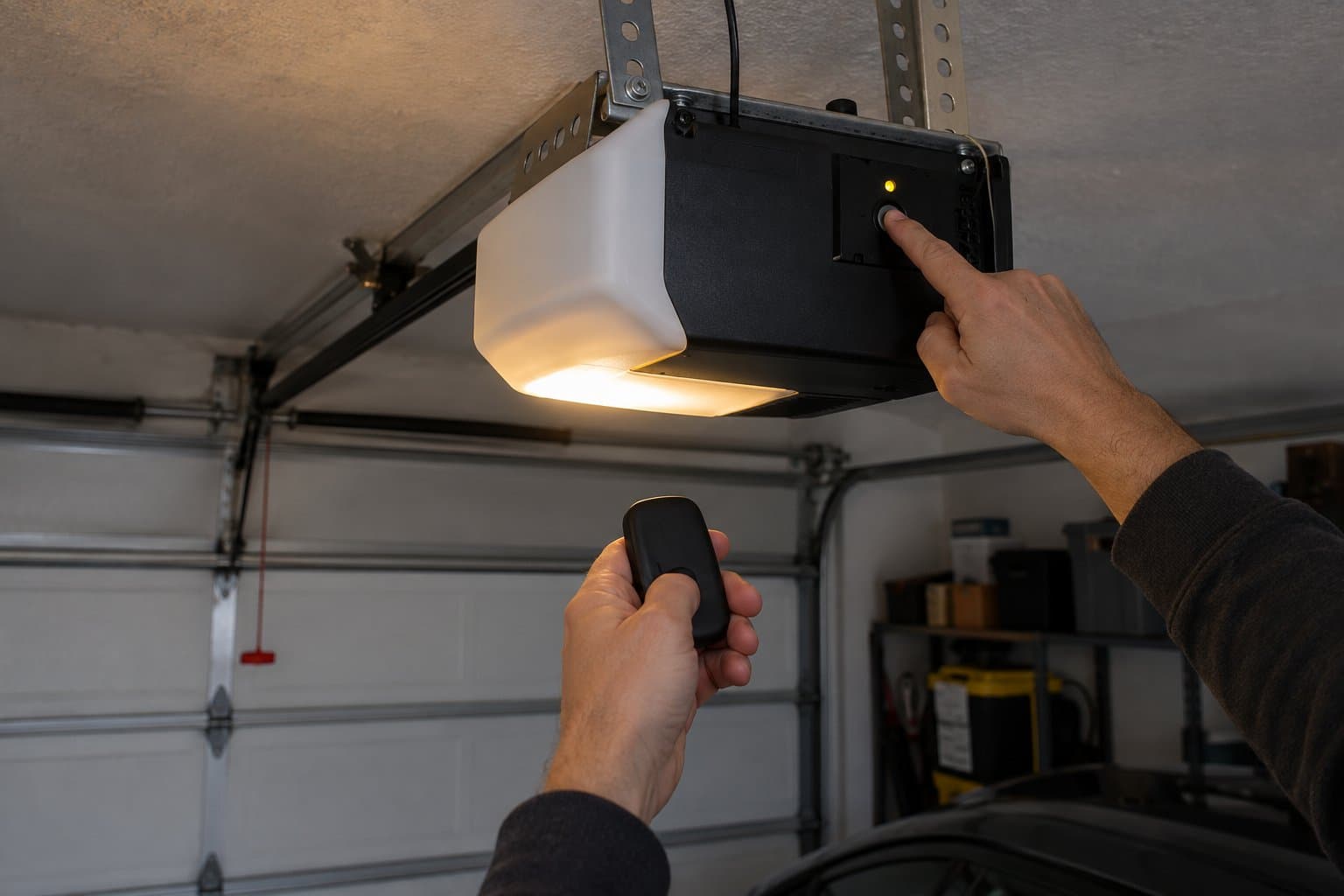
The opener has a learn button that pairs it with each remote and keypad. Pairings can be lost after a power cut, and an opener's memory can fill up or be wiped.
Often the least expensive opener fault there is. If the remote has a new battery and still does nothing, it needs pairing again or replacing with one that matches the opener.
Safety sensors out of line
“The door starts to close, then goes back up, and the light flashes”
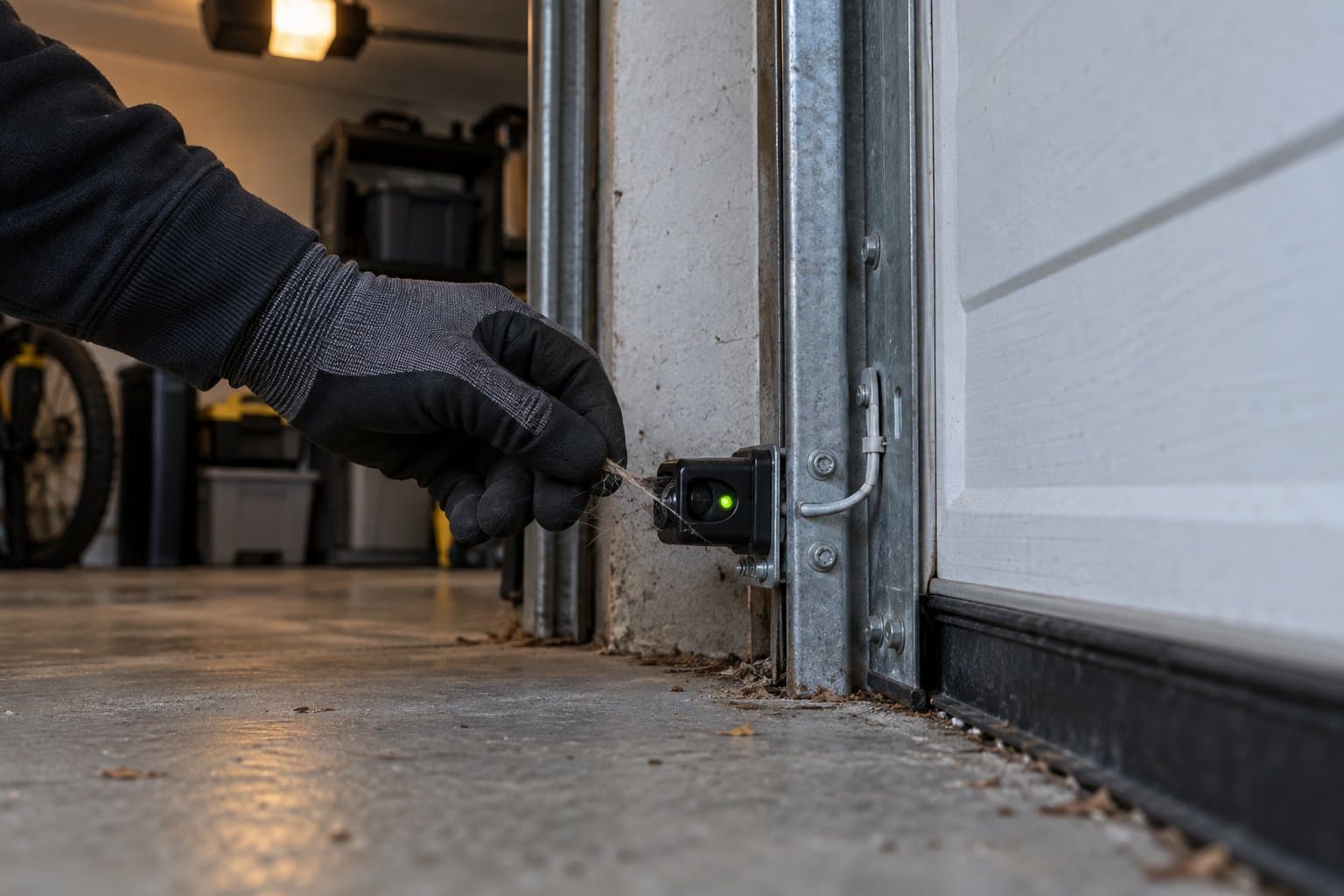
Two small sensors near the floor send a beam across the doorway. If anything breaks the beam the door will not close. A knocked bracket, a cobweb, a leaf, or low sun shining into the lens will all do it.
Cleaned and re-aligned in most cases, with damaged wiring or a failed sensor replaced where that is the cause. These are what stop the door closing on a person, so they are repaired and never bypassed.
Repair it or replace it?
Repair it when
- The opener is otherwise sound and the fault is one part: a gear, a board, a capacitor, a sensor, a remote.
- The part is still made and fitting it costs sensibly less than a new opener.
- The opener already has the safety sensors and rolling-code remotes that current openers have.
Replace it when
- The motor itself has failed, or this is the second or third repair on the same unit.
- It has no safety sensors near the floor. Openers made for the United States have been required to have them since 1993, so one without them is over thirty years old.
- It uses fixed-code remotes. Older openers send the same code every time, which can be copied; current ones change it on every press.
- You want something it cannot do: run quietly under a bedroom, open from your phone, or work through a power cut.
What replacing an opener involves
- 1
The door is checked first
An opener moves a door that the springs are already holding up. If the door is heavy or binding, that is fixed before any opener is fitted, or the new one will wear out the same way the old one did.
- 2
The opener is matched to the door
Door weight and height, the type of spring, the ceiling and the space beside the door decide what will fit and what will last. A double wooden door and a single steel one do not want the same opener.
- 3
You get the price before anything is removed
The estimate is free. The technician tells you what they recommend and what it costs, and you agree it before the old opener comes down.
- 4
The old opener comes out and the new one goes in
Rail, motor, wall control, safety sensors and wiring. The travel limits and the closing force are set so the door stops where it should and reverses when it meets something.
- 5
Everything is paired and tested with you there
Remotes, keypad, the buttons built into your car, and your phone if the opener supports it. The safety reversal is tested in front of you before the technician leaves.
Brands the technicians work on
- LiftMaster
- Chamberlain
- Craftsman
- Genie
- Overhead Door
- Linear
- Marantec
- Sommer
Tell us the name on the motor when you call. One Call Garage Door is not affiliated with, authorised by or endorsed by any opener manufacturer. These names belong to their owners and appear here only to say what the technicians work on.
Questions people ask
- Is it worth repairing my opener or should I replace it?
- If it is one failed part on an otherwise sound opener, repair it. If the motor has gone, if it has no safety sensors near the floor, or if this is not its first repair, replacing it is usually the better use of the money. The technician gives you both options with a price for each.
- Which brands do the technicians work on?
- The common ones: LiftMaster, Chamberlain, Craftsman, Genie, Overhead Door, Linear, Marantec and Sommer. Tell us the brand on the motor when you call, and the model if you can see it, so the technician brings the right parts.
- Chain or belt — which should I choose?
- Both will lift the door for many years. A chain drive is simple and strong and you will hear it. A belt drive does the same job quietly, which matters if there is a room above or beside the garage.
- Can I keep my existing remotes and keypad with a new opener?
- Sometimes, if the new opener is the same make and uses the same radio system as the old one. Often not, and new openers come with their own remotes. The buttons built into your car can usually be paired with a new opener.
- My opener works but I want to open the door from my phone. Do I need a new one?
- Not always. Many openers can take an add-on controller that connects them to your Wi-Fi. It depends on the make and age of the opener, so mention it when you call.
- The door is very heavy to lift by hand. Will a stronger opener fix that?
- No. A door that is heavy to lift has a spring problem, and the spring is what needs attention. A stronger opener on an unbalanced door will struggle and fail early, and an unbalanced door is unsafe whatever is lifting it.
Opener trouble?
Free estimate. The price is agreed before the work starts.