
Stop using the door
Garage door stuck half open in Cape Coral, FL
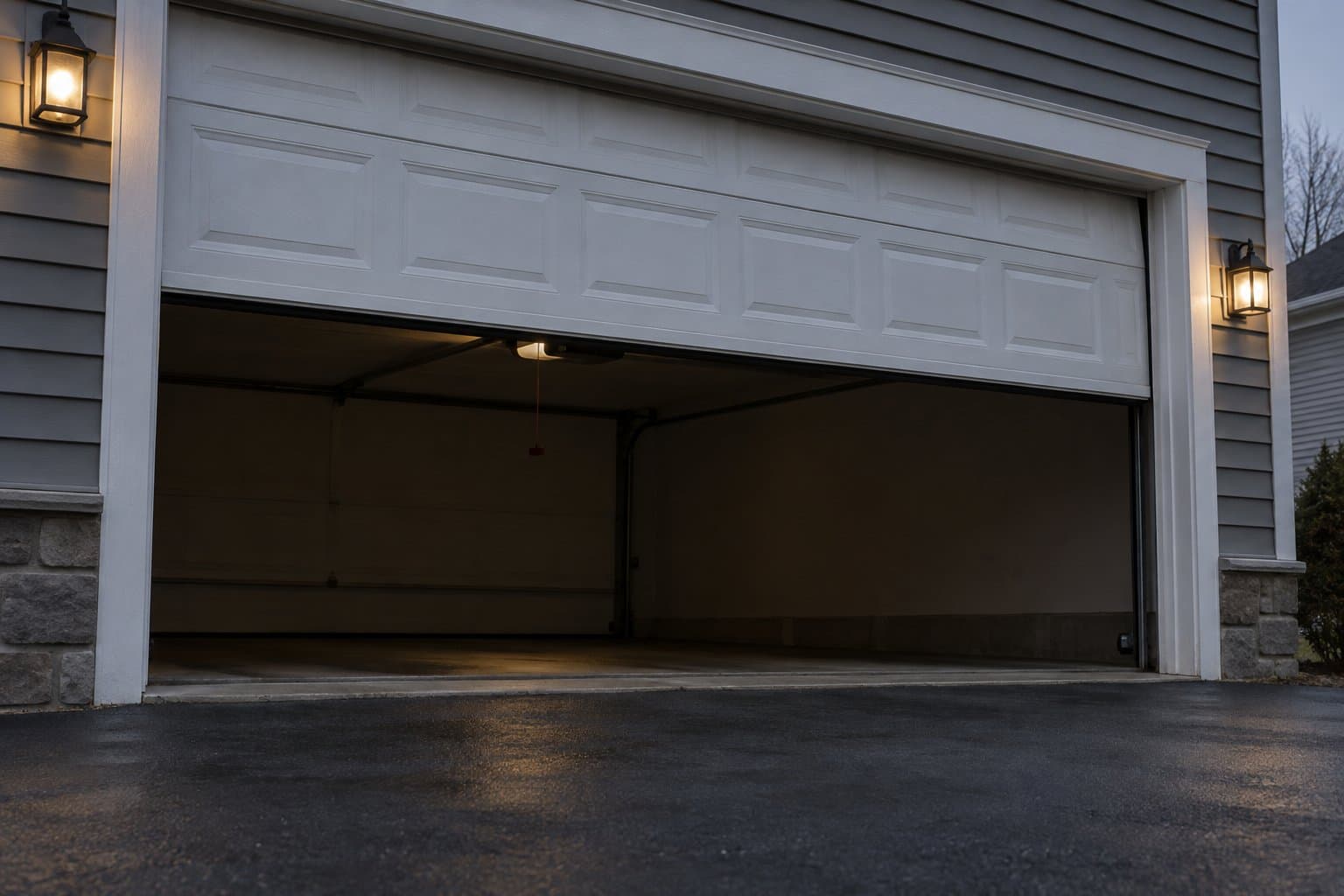
Your door went up part way and stopped. It will not go up. It will not come down. In most cases that means the door has lost its balance, or something in the lifting system has let go. A broken spring, a frayed or snapped cable, a roller that has jumped out of the track, or an opener that hit its limit and shut itself down. The opener is usually not the cause. It is the part that gives up when the door gets too heavy or too crooked to move.
Phones answered around the clock · free estimate
In Cape Coral, corrosion is the reason more often than people expect. The city is wrapped in more than 400 miles of saltwater and brackish canals, and salt-laden air eats at springs, cables, rollers, tracks and hardware. Parts here often fail years sooner than the same parts would inland. Add year-round high humidity and a June to October rainy season with near-daily thunderstorms, and steel that is already thinning gets pushed the rest of the way. Most homes here are one-story concrete block with an attached two-car garage, so the double door is heavy, and when one side gives out the whole thing binds and stops.
While you wait — please don't
- Stop using the door. Every extra press of the button drags a crooked door against the track and bends it further, turning a repair into a bigger one.
- Do not stand or reach under it. A door held up by a failing spring or a half-wound cable can drop without warning, and a double door on a block home is heavy enough to cause serious injury.
- Do not try to fix the springs or cables yourself. Torsion springs and cables hold enormous tension even when broken, and releasing that tension without the right tools and training is how people get badly hurt.
- Do not leave the garage standing open. An open garage is a security problem, and in Cape Coral's rainy season a wind-driven afternoon storm will push water straight in.
- Do not force the release rope while the door is raised. Pulling the emergency release on an unbalanced door can let it slam down fast, so leave it alone until someone has secured the door.
What the technician does
- The door gets secured firstBefore anything else the technician blocks or clamps the door so it cannot drop. Nothing else is safe to check until that is done.
- Springs and cables get inspectedThe technician looks for a broken or stretched spring and for cables that are frayed, off the drum or snapped. On a canal-side home, rust and pitting tell a lot about what else is near the end.
- Rollers and track get checked as one systemA roller out of the track, a bent section of track or a loose bracket will stop a door mid-travel. These parts are checked together, because one failing part usually damaged the next.
- Balance is restoredOnce the worn parts are addressed, the door is set so it holds its own weight halfway up without creeping or slamming. That is the test that says the door is actually fixed.
- Opener travel and force are resetThe opener limits and force settings are reset so it stops where it should and does not fight a door that is now moving freely. The safety reverse is tested.
- You get the price before work startsThe estimate is free. The technician looks at the door, tells you the price, and you approve it before any work begins.
Why this happens in Cape Coral, FL
Cape Coral is a hard place on garage door hardware, and it has nothing to do with cold. Hard freezes here are essentially unheard of. It is the salt air off the canals, the constant humidity, and the storms. Thousands of homes back directly onto saltwater with docks and boat lifts, and the springs and tracks in those garages corrode on a faster clock. Homes across the Burnt Store corridor, Pelican, Trafalgar, Mariner, Cape Harbour and the newer developments all see the same thing, whether the house went up in the 1980s or last year.
Timing matters too. Demand climbs ahead of and after hurricane season, June through November and heaviest August through October, and again from roughly October to April when seasonal owners reopen houses and catch up on repairs that sat all summer. A door that has been closed and untouched for months is a common one to stick halfway on the first try. If you are replacing the door rather than repairing it, keep in mind that Florida Building Code wind-load rules apply here and a permit is typically required for a door replacement, issued and inspected by your local building department. Confirm the exact rating and paperwork for your address with them.
Questions people ask
- Can I just push the door the rest of the way down?
- No. If a spring or cable has failed, the door is far heavier than it feels and can come down hard. Leave it where it is and get someone out to secure it first.
- Why do Cape Coral doors seem to fail sooner?
- Salt-laden air from the hundreds of miles of canals accelerates corrosion on springs, rollers, tracks and hardware. Combined with year-round humidity, that hardware often gives out years earlier than the same parts would inland.
- The opener is straining and clicking. Is that the problem?
- Usually not the cause. The opener is normally reacting to a door that has gone out of balance or come off its track, and it stops rather than force it. The technician checks the door as a system before touching the opener settings.
- Do I need a permit for this?
- A repair is different from a replacement. In Florida a permit is typically required to replace a garage door because it is part of the building envelope and must meet code, and permits are issued locally, so check with the Cape Coral building department for your address.
- Are you the company doing the work?
- No. One Call Garage Door is a referral and scheduling service that arranges garage door service with independent local technicians across all fifty states. We are not the contractor and we do not perform the work ourselves.
One call
Call (866) 394-4210 and we will arrange service with an independent local technician for your stuck door. The estimate is free, and the technician gives you the price for your approval before any work starts.
Something else in this area
- Cable snapped or loose
- Loud bang, door won't lift
- Door won't open or close
- Door is off its track
- Dented or damaged panel
- Loud, grinding or shaking
One Call Garage Door arranges the visit; the technician does the work and gives you the price.