
Stop using the door
Will not open or close in Port St. Lucie, FL
Your door is dead. You press the button, maybe you hear a click or a hum, and nothing moves. Or it starts, stops, and reverses back up. Almost always it is one of four things: a broken spring, a snapped cable, a failed opener drive, or the two safety sensors near the floor that have been knocked out of line. Those look similar from the driveway but they are not the same repair, and guessing wrong is how people get hurt. Do not keep hitting the button to see if it catches.
Phones answered around the clock · free estimate
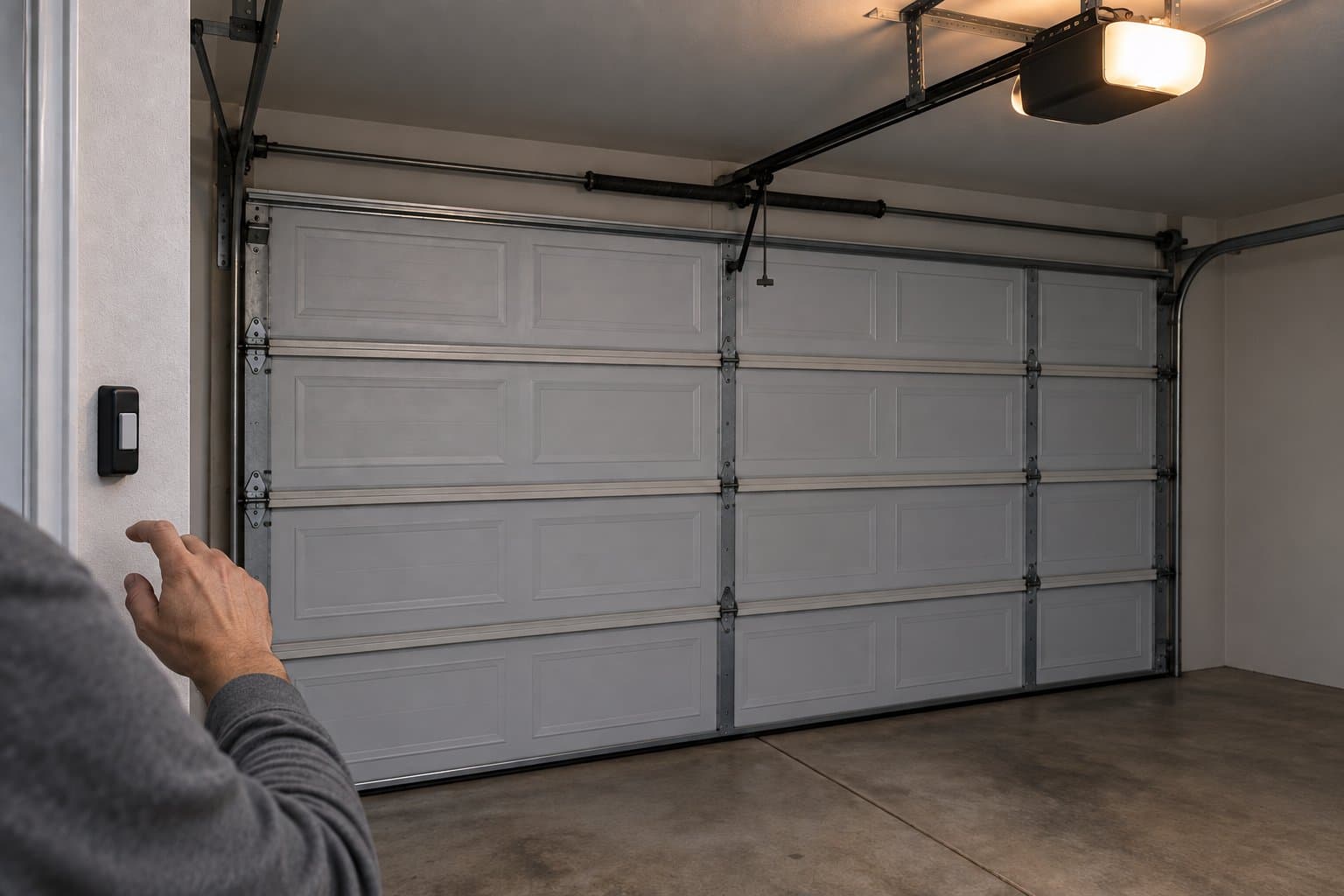
In Port St. Lucie this happens for reasons tied to where you live. The air here is humid all year, the Atlantic is only a few miles east, and salt-laden air reaches much of the city. That combination rusts springs, cables, hinges and rollers from the inside out, so a spring that looked fine last month can let go without warning. Storms bring their own problems: power cuts and surges take out openers and un-pair remotes, and damp and dust push the floor-level sensors out of alignment so the door refuses to close.
While you wait — please don't
- Stop using the door. If a spring or cable has failed, or the door has come off its track, every extra press puts load on parts that are already broken and makes the damage worse.
- Do not try to fix a spring or cable yourself. Garage door springs and cables hold enormous stored tension and can release suddenly, which is why this is not a homeowner repair at any skill level.
- Do not force a crooked door. A door that is sitting lopsided in the opening will bind harder each cycle and can pull the track or rollers apart completely.
- Do not bypass or tape over the safety sensors. Those sensors are the thing that stops the door closing on a child or a pet, and defeating them to get the door shut removes that protection for good.
- Do not park under a stuck door. If the door is holding halfway or resting on a failed spring, keep people and vehicles out from under it until someone has looked at it.
What the technician does
- Find the actual fault firstThe technician works out which of the spring, cable, opener or safety sensor is at fault before quoting anything. The symptom is the same from the driveway; the repair is not.
- Check the springs and cablesSprings and cables get inspected for rust, stretch, breaks and fraying, which matters a lot on the salt air and humidity here.
- Diagnose the opener driveIf the motor runs but the door does not move, or nothing happens at all, the drive, the power supply and the remote pairing are checked.
- Realign and test the sensorsThe two sensors near the floor are cleaned, realigned and tested until the door closes on its own without reversing.
- Rebalance the doorA door that is out of balance drags on the opener and shortens its life, so it is set to sit and hold correctly on the track.
- Price before workYou get a free estimate. The technician looks at the door, gives you the price, and you approve it before anything starts.
Why this happens in Port St. Lucie, FL
Port St. Lucie grew out of huge 1960s-era platted subdivisions and is still building west of I-95, so the doors here are all over the map. A technician can work on a forty-year-old single-car door in River Park in the morning and a brand-new wind-rated insulated unit in Tradition or Verano the same afternoon. Attached one- and two-car garages are near-universal on the slab-on-grade block-and-stucco homes across the city, which means when the door stops moving, the car is usually shut in and so is the main way into the house.
Season matters too. Demand climbs ahead of and during hurricane season from June to November, and again in October and November when snowbirds return and seasonal homes get reopened and checked. The Treasure Coast is a high-risk hurricane corridor — Frances and Jeanne both hit here in 2004 — so wind rating, bracing and impact protection are real concerns, not sales talk. Between storms, salt air, sandy soil and sprinkler overspray keep corroding tracks, hardware and exterior locks, which is why corrosion-related calls in Port St. Lucie are a year-round staple rather than a seasonal one.
Questions people ask
- My opener hums but the door will not move. What is that?
- That usually points to a broken spring or cable, with the opener straining against a door it can no longer lift. Stop pressing the button and leave the door alone. A technician will confirm which part failed before giving you a price.
- The door goes down a foot then reverses. Why?
- That is typically the safety sensors at floor level, which are easily knocked out of alignment by damp, dust or a bump. It can also be a travel setting or an obstruction on the track. Do not tape or bypass the sensors to force it shut.
- We lost power in a storm and now nothing works at all.
- Power cuts and surges around Port St. Lucie regularly take out openers and un-pair remotes. Sometimes it is a reprogramming job, sometimes the drive board took the surge. The technician checks the power and the drive before quoting.
- Could the salt air really be the cause?
- Yes. With the Atlantic a few miles east and high humidity all year, salt-laden air pits hardware and rusts springs, cables, rollers and hinges across much of the city. A rusted spring can fail suddenly even if the door worked fine yesterday.
- Do I need a permit?
- For a repair, usually not. For a full door replacement in Florida a permit is typically required, because the door is part of the building envelope and must meet Florida Building Code wind requirements with approved product documentation. Permits are issued locally, so confirm details with your city or county building department.
- Are you the company doing the work?
- No. One Call Garage Door is a referral and scheduling service that arranges garage door service with independent local technicians across all fifty states. We are not the contractor and we do not perform the work.
One call
One call to (866) 394-4210 and we will arrange for an independent local technician to look at your door in Port St. Lucie. The estimate is free, and you get the price and approve it before any work starts.