
Why is my garage freezing cold even with the door fully closed?
A closed garage door still lets cold in through gaps around its edges and through the door itself. The usual causes are a worn bottom seal, missing or hardened weatherstripping at the sides and top, and a thin door with no insulation in its panels.
Phones answered around the clock · free estimate
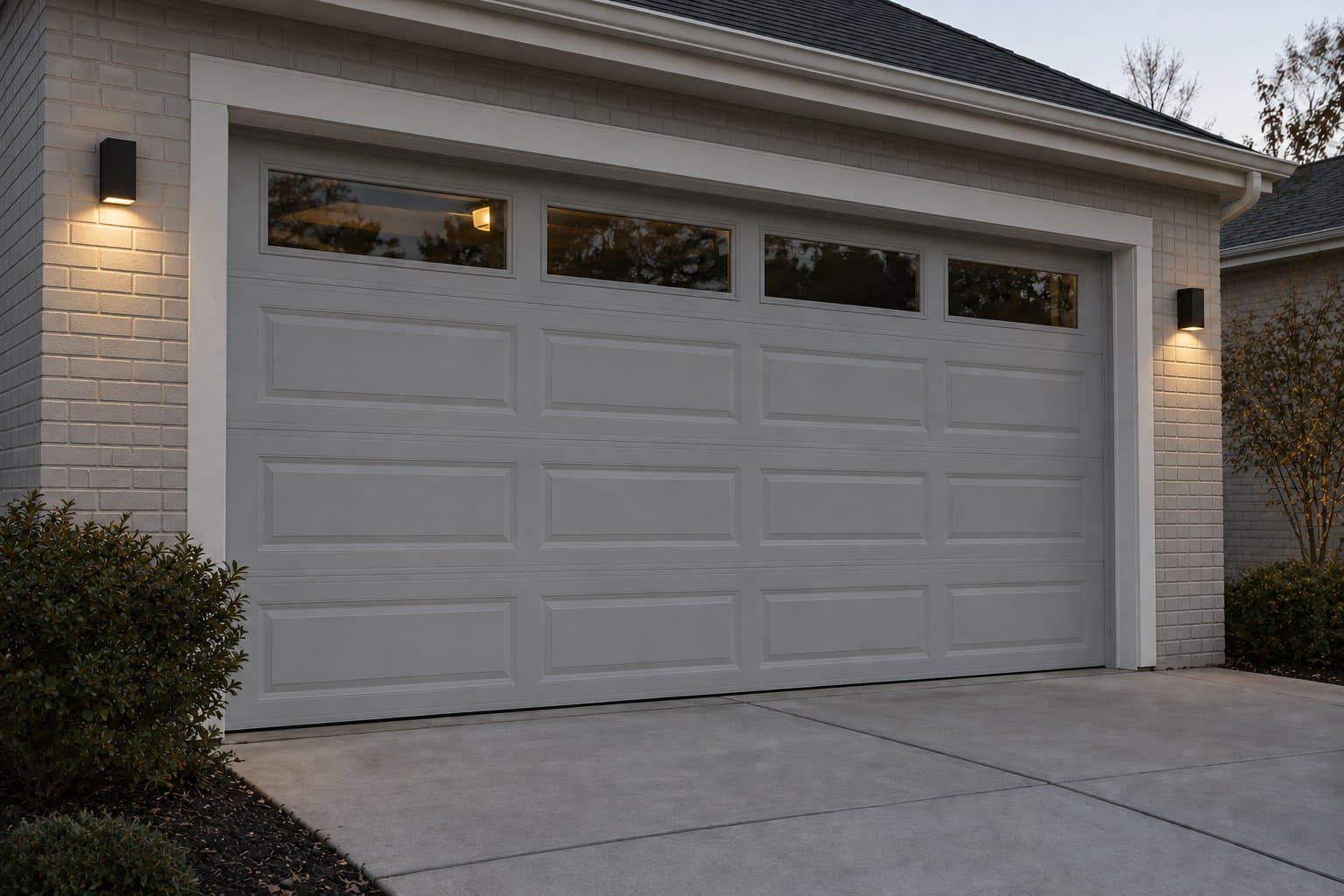
The door is only one part of the picture. Cold also comes through the walls, the ceiling, an attic hatch or a gap where the garage meets the house. A new insulated door helps a lot where the garage is attached or has rooms above it. It matters far less on a detached garage nobody uses.
Why it happens
A garage door is a big, flat surface made of several panels. Every seam and every edge is a place where air can move. The rubber seal along the bottom flattens, cracks and shrinks over time. The strips along the sides and top stiffen, tear or get knocked loose. Once they stop touching the door, cold air flows in and warm air flows out.
The panels matter too. A basic single-layer steel door has almost no resistance to heat loss, so the whole door acts like a cold wall. That slows the cold down. How much that helps depends on your climate and on how the garage is used.
Sometimes the door is not the main culprit. An uninsulated garage ceiling under a bedroom, a bare shared wall with the house, an attic hatch, a window or a gap around a pipe can all leak more than the door does. A technician can tell you honestly whether a new door will fix the problem or only part of it.
What you can check yourself
- Look for daylightWith the door closed, stand inside during the day and look along the bottom, sides and top. Any strip of light is a gap that air can pass through.
- Inspect the bottom sealLook for rubber that is flattened, cracked, torn or pulling out of its channel. Check that it meets the floor evenly along the whole width.
- Feel the seamsOn a cold, windy day, run your hand near the panel joints and the side strips. Moving air tells you where the leaks are.
- Check what the door is made ofLook at the inside face. A flat, bare single layer of metal is uninsulated. A backing of foam or a thick, sandwiched panel means it is insulated.
- Check the rest of the garageLook at the attic hatch, windows, the wall shared with the house and the ceiling. Cold coming from there will not be fixed by a new door.
When to call a technician
Call if the seals are worn and you want them replaced, or if the door is bare single-layer steel and you are thinking about replacing it. Also call if the door sags, leaves a gap along one side or no longer closes squarely. Do not use a door that looks off track, and do not touch the springs, cables or brackets. Those parts are under tension and are for a technician only. To arrange a free estimate, call (866) 394-4210.
A full door replacement needs a building permit in some cities, and in most coastal high-wind and hurricane zones the new door must also carry a wind rating. Those ratings do not apply in most of the country. Ask your local building department before you order a door. The technician holds whatever license their state requires. To verify that, check your state's contractor licensing board.
What the technician will do
- Find where the cold is coming inThe technician looks at the seals, the panels, the way the door sits in the opening and the condition of the track. Then they tell you whether new seals or a new door is the better fix.
- Measure the openingFor a replacement, they measure the opening width and height, plus the headroom, backroom and sideroom, so the new door fits.
- Explain insulation for your situationThey go over insulated steel, carriage-house and flush styles. They explain what insulation will and will not do in your climate and for the way your garage is used.
- Install and match the springsThe springs are sized to the new door rather than carried over from the old one. The old door is removed.
- Give the price firstThe technician gives you the price in person before any work starts. You approve it first.
Related questions
- Will a new insulated door make my garage warm?
- It will cut heat loss and cold drafts, but it will not turn a garage into a heated room. The walls, ceiling and any gaps still count. The benefit is greatest when the garage is attached to the house or sits under living space.
- Can I just replace the weatherstripping instead of the whole door?
- Often yes, if the door itself is straight, solid and in good shape. New seals fix many drafts. If the panels are dented, damaged or uninsulated and you want a warmer garage, replacement may make more sense.
- What affects the cost of a new garage door?
- The main factors are the door's size and weight, the style and insulation you choose, and whether the springs and hardware need replacing. Access to the opening and what the technician finds when they look also matter. The free estimate gives you the actual price before any work starts.
- Do I need a permit to replace my garage door?
- It depends on your city. Some require one for a full replacement, and most coastal high-wind zones do because of wind ratings. Ask your local building department before you order.
Get a technician out
Free estimate. The price is agreed before the work starts.
Or send us a message
Leave your details and what the door is doing, and someone from the team will call you back.
One Call Garage Door arranges the visit; the technician does the work and gives you the price.