
Loud or grinding garage door in Coral Springs, FL
You press the button and the whole door rumbles, rattles and shakes its way up. That noise is almost always worn rollers, dry hinges and bearings, and hardware that has worked itself loose. Bolts back out a little at a time, the rollers stop rolling and start dragging, and the door fights the track instead of gliding through it. Nothing has failed yet. That is the good news.
Phones answered around the clock · free estimate
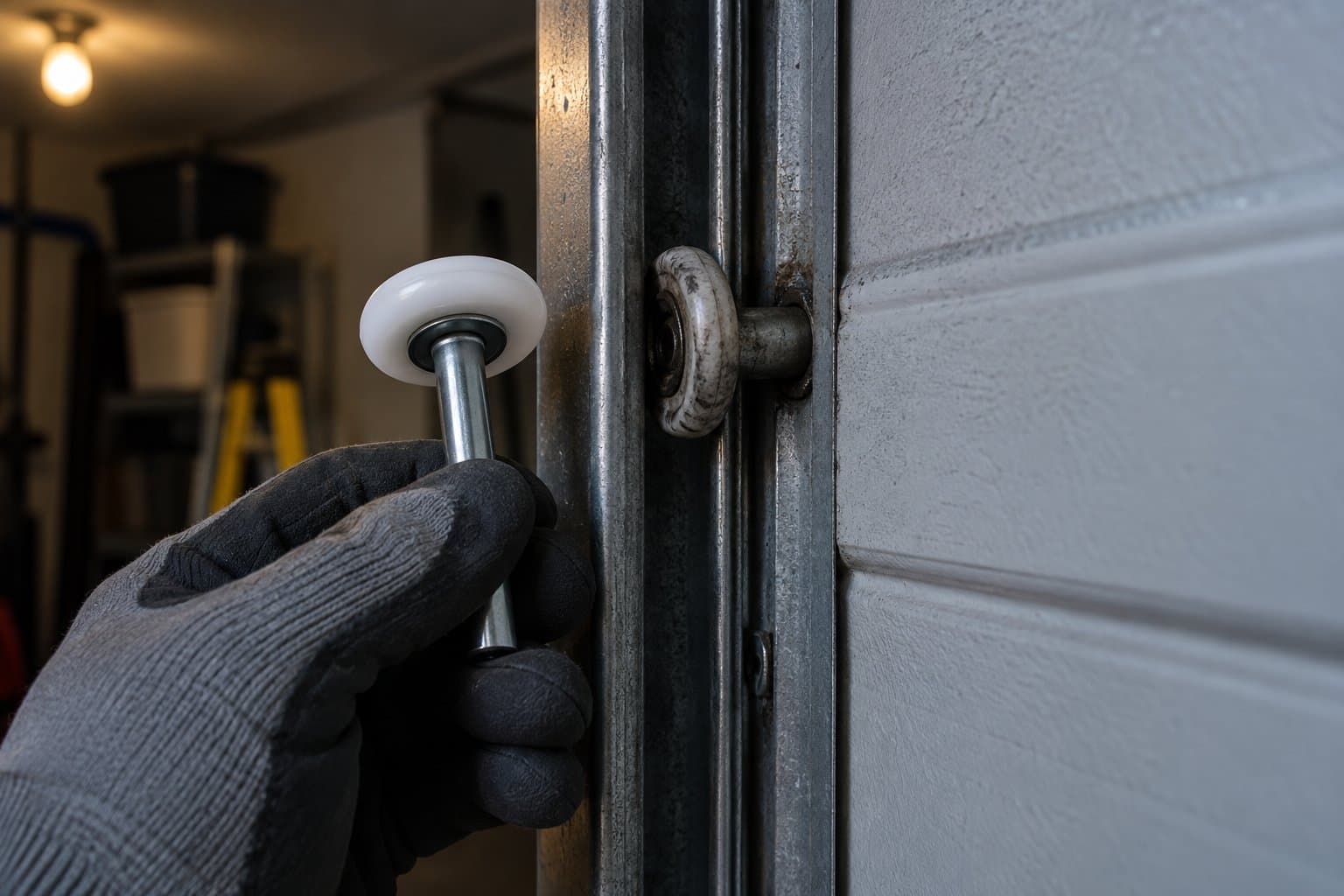
In Coral Springs this happens faster than people expect. The climate here is hot and humid with a long May to October wet season, and that moist air is the main enemy of springs, rollers, hinges and tracks. Rust works into the bearings and the noise follows. Most homes here were built from the 1960s through the early 2000s, concrete block and stucco with attached one- and two-car garages, so a lot of the original hardware and openers in this city are now 30 to 50 years old and well past their quiet years.
While you wait — please don't
- Stop if the noise changed suddenly. A gradual rumble is wear, but a sudden bang, scrape or pop is different — stop using the door and get it looked at before you run it again.
- Do not touch the springs or cables. The springs and cables hold enormous stored tension and can cause serious injury, so this is not a do-it-yourself job even when the door still moves.
- Do not grease the tracks. Grease on a track collects grit and dust and makes the grinding worse, not better — tracks are meant to stay clean.
- Do not keep cycling a shaking door. Worn rollers and loose hardware are exactly what pull a door off its track later, and an off-track door is a far bigger and more dangerous problem.
What the technician does
- The technician runs the door and listensMost of the diagnosis is watching one full cycle and finding where the noise is coming from. Rollers, hinges, the shaft and the opener drive all sound different.
- Rollers get replacedWorn steel rollers are the usual culprit. Nylon rollers are the common fix and they run noticeably quieter.
- Hinges, bearings and shaft get servicedDry or corroded bearings and hinges grind every time the door moves. They are cleaned, serviced or swapped as needed.
- All the hardware is retightenedYears of vibration loosen bolts across the door, the hinges and the track brackets. Everything gets brought back to spec.
- Balance is restoredA door that is out of balance makes the opener work harder and everything louder. The technician checks the balance and corrects it.
- Drive and opener noise addressedA loose chain gets tensioned. If quiet really matters — a bedroom over the garage, a townhome with shared walls — a belt drive can be fitted instead.
Why this happens in Coral Springs, FL
Coral Springs sits about a dozen miles inland from the Atlantic, so you get less direct salt spray than the beach towns. That does not spare the hardware. Humid air alone drives corrosion on rollers, hinges and tracks, and in a master-planned city where so much of the stock went up in the same few decades, a lot of doors hit the noisy stage at roughly the same time. Whether you are in Ramblewood, Eagle Trace, Turtle Run, Heron Bay or near the Country Club, the pattern looks the same.
Timing matters here too. Demand climbs ahead of and during hurricane season, roughly May through November, and again in the dry winter months when seasonal residents come back and catch up on deferred maintenance. Coral Springs is in Broward County's High-Velocity Hurricane Zone, so wind-load and impact ratings govern garage doors and openings — that applies to replacement doors, not to tightening hardware and swapping rollers. Noise is the cheap stage. Worn rollers and loose hardware are what put doors off track later, so dealing with it now is the whole point.
Questions people ask
- Is a loud garage door actually dangerous?
- Gradual rumble is a wear problem, not an emergency, but it is a warning. The same worn rollers and loose bolts making the noise are what let a door come off its track. If the sound changes suddenly to a bang, scrape or pop, stop using the door.
- Why do garage doors in Coral Springs get noisy so fast?
- Heat and high humidity year-round accelerate rust on springs, hinges, rollers and fasteners. Coral Springs has a long wet season from May to October, and moisture is the main enemy of garage door hardware here. Add 30 to 50 year old original hardware on much of the housing stock and noise shows up early.
- Can I just spray lubricant on it myself?
- Lubricant on the tracks makes things worse, because grease collects grit and the door grinds harder. Leave the springs and cables alone entirely — they are under heavy tension. A technician can service the right parts without creating a new problem.
- Do I need a permit or HOA approval to fix a noisy door?
- Repair work like rollers, hinges and hardware is different from replacing the door itself. In Florida a permit is typically required to replace a garage door because it is part of the building envelope, and in Coral Springs HOA or architectural-review approval is often needed too, on top of Broward County permitting and HVHZ wind-load compliance. Confirm the specifics for your address with the local building department.
- Who actually shows up, and what does One Call Garage Door do?
- One Call Garage Door is a referral and scheduling service. We arrange your garage door service with an independent local technician — we are not the contractor and we do not perform the work. Licensing is the technician's own and varies by jurisdiction, so you can confirm it with them and with the Florida DBPR or your local licensing board.
One call
One call gets a technician scheduled for your noisy door in Coral Springs, and the estimate is free. They look at the door, give you the price before anything starts, and you approve it first — call (866) 394-4210.
Something else in this area
- Dented or damaged panel
- Loud bang, door won't lift
- Door won't open or close
- Door is off its track
- Opener or remote dead
- Stuck half open
- Cable snapped or loose
One Call Garage Door arranges the visit; the technician does the work and gives you the price.