
Loud or grinding garage door in Fort Lauderdale, FL
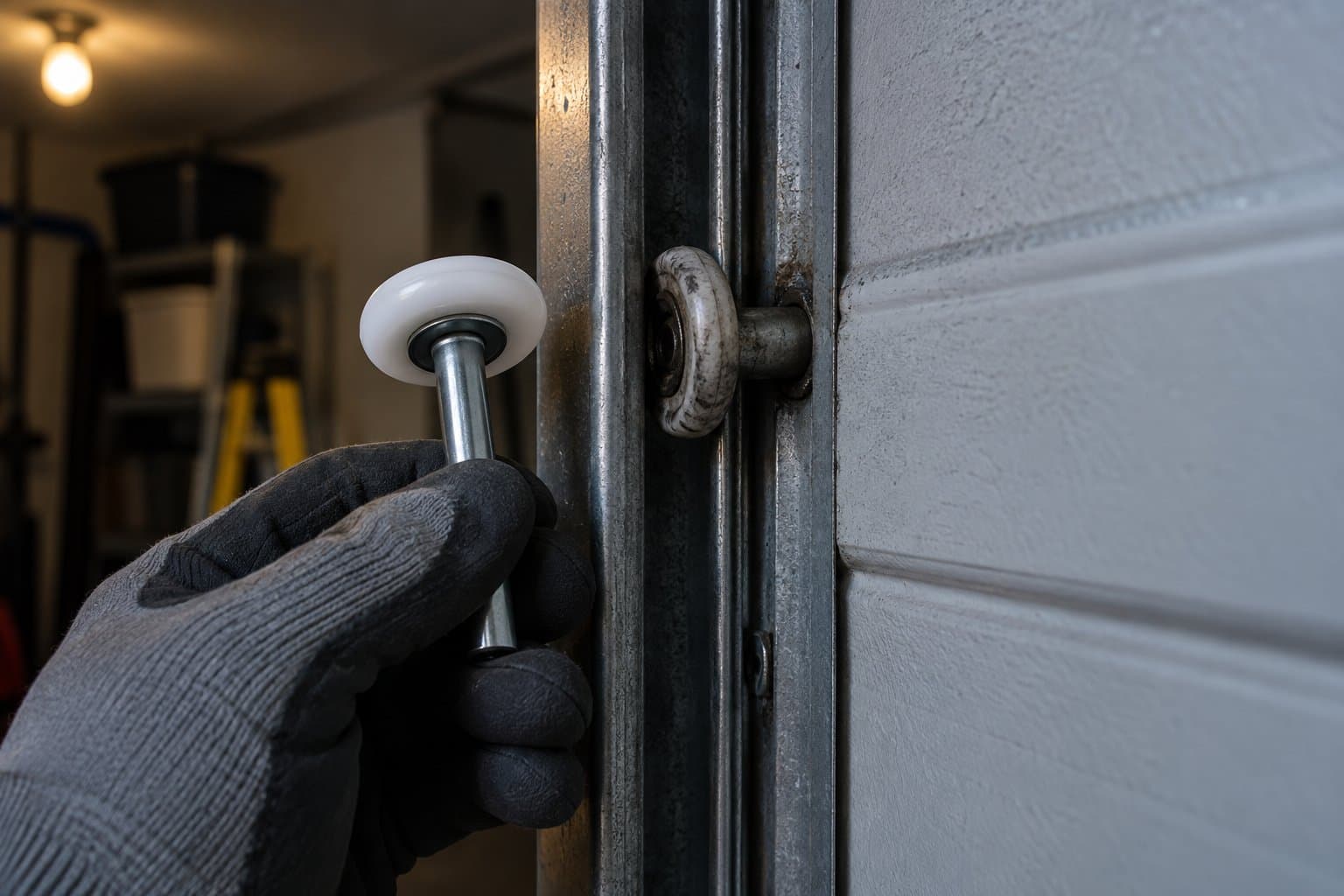
You said it yourself: the door has got really loud and shakes when it moves. Almost every time, that is worn rollers, loose hardware, or dry bearings in the hinges and the shaft the springs sit on. Metal parts that used to roll smoothly are now dragging, and every bolt on the door has been shaken a little looser each time it runs. Noise is the cheap stage. Worn rollers and loose hardware are exactly what put doors off track later, which is a much bigger job.
Phones answered around the clock · free estimate
Fort Lauderdale is hard on garage door hardware. Salt air off the Atlantic and the city's canals corrodes springs, rollers, tracks and hinges far faster than inland, and the year-round humidity keeps that process going through every season. On waterfront streets, parts often need service years earlier than the manufacturers' averages. A lot of the single-family housing here is 1950s to 1970s concrete block on slab, with attached one- and two-car garages, so plenty of these doors are running on hardware that has been rusting in a hot, humid, salty environment for a long time.
While you wait — please don't
- Stop if the noise is a bang, scrape or pop. A sudden new bang, scrape or pop is different from a gradual rumble and usually means a spring, cable or roller has failed, so stop using the door and leave it alone.
- Do not work on the springs or cables. The springs and cables hold enough stored force to injure you badly, and they are not a DIY repair at any skill level.
- Do not grease the tracks. Grease on the track collects grit and salt dust and makes the grinding worse, not better.
- Do not keep running a shaking door. Every cycle loosens more hardware and wears the rollers further, which is how a noisy door becomes a door off its track.
What the technician does
- The technician listens and finds the sourceRumble, grinding, slapping and banging all come from different parts. The technician runs the door and traces the noise before touching anything.
- Rollers replacedWorn or seized rollers are the most common cause of a loud door. Nylon rollers run far quieter than old metal ones.
- Hinges, bearings and shaft servicedDry or corroded hinges, end bearings and the shaft the springs sit on all squeal and grind. These get cleaned and properly lubricated, not smeared with grease.
- Hardware retightenedBolts, brackets and track fasteners loosen over years of vibration. Going back over them removes a lot of the rattle and shake.
- Balance restoredA door that is out of balance is heavy on the opener and noisy through the whole travel. The technician checks balance and corrects the spring tension.
- Chain tensioned, or a belt drive fittedA slack chain slaps and bangs overhead. Where quiet matters — a bedroom over the garage, or a townhome with neighbors close by — a belt drive opener is an option.
Why this happens in Fort Lauderdale, FL
Salt is the real story here. Constant salt air and high humidity attack springs, rollers, tracks, hinges and fasteners, and in the canal and Intracoastal neighborhoods that corrosion moves faster still. Rust in the roller bearings is why so many Fort Lauderdale doors start to rumble and shake long before you'd expect. The same salt air works on gate hardware and exterior lock cylinders, so if the garage door is complaining, it is worth looking at the rest of the metal outside too.
Timing matters in Fort Lauderdale as well. Hurricane season runs June 1 to November 30, and a door with loose hardware and worn rollers is not a door you want facing wind-driven rain and high winds. Broward County sits in the High-Velocity Hurricane Zone, where garage doors generally have to meet specified design pressure ratings and, in many cases, impact requirements — much of the older single-family stock here predates modern code, so if a noisy door turns out to be near the end of its life, upgrading before storm season is a common choice. Demand also picks up from November to April, when snowbird residents return and open up homes that have sat closed in the humidity for months.
Questions people ask
- Is a noisy garage door actually urgent?
- A gradual rumble is not an emergency, but it is a warning. The worn rollers and loose hardware causing that noise are the same things that send doors off track later, and fixing them at the noise stage is far simpler than after a failure.
- Why do Fort Lauderdale doors get loud so fast?
- Salt air off the Atlantic and the canals, plus year-round humidity, corrode springs, rollers, hinges and tracks much faster than inland. On waterfront properties, hardware often needs service years earlier than the averages suggest.
- Can I just spray lubricant on it myself?
- Light lubrication of hinges and bearings can help, but keep it off the tracks — grease on the track collects grit and makes the grinding worse. And if the noise is a bang, scrape or pop rather than a rumble, stop using the door and have it looked at.
- Do I need a permit for this?
- Repairs like rollers, hinges and hardware are different from a full door replacement. In Florida a permit is typically required to replace a garage door, because the door is part of the building envelope and needs approved product documentation — permits are issued locally, so check with the Fort Lauderdale or Broward County building department.
- Are you the company doing the work?
- No. One Call Garage Door is a referral and scheduling service that arranges garage door service with independent local technicians. We are not the contractor and we do not perform the work ourselves.
One call
One call to (866) 394-4210 and we arrange for an independent local technician to look at your Fort Lauderdale door. The estimate is free, and the technician gives you the price before any work starts — you approve it first.
Something else in this area
- Cable snapped or loose
- Dented or damaged panel
- Loud bang, door won't lift
- Door won't open or close
- Door is off its track
- Opener or remote dead
One Call Garage Door arranges the visit; the technician does the work and gives you the price.