
Stop using the door
Garage door that will not open or close in Fort Lauderdale, FL
If the door just will not move, one of four things is usually behind it: a broken spring, a snapped cable, a dead or failing opener, or a safety sensor that has drifted out of line. A couple of clues help. If the opener motor runs but the door stays put, or the door feels like dead weight when you lift it by hand, think spring or cable. If the opener clicks and the light blinks but nothing happens, the sensors near the floor are the usual suspect. Either way, stop running it.
Phones answered around the clock · free estimate
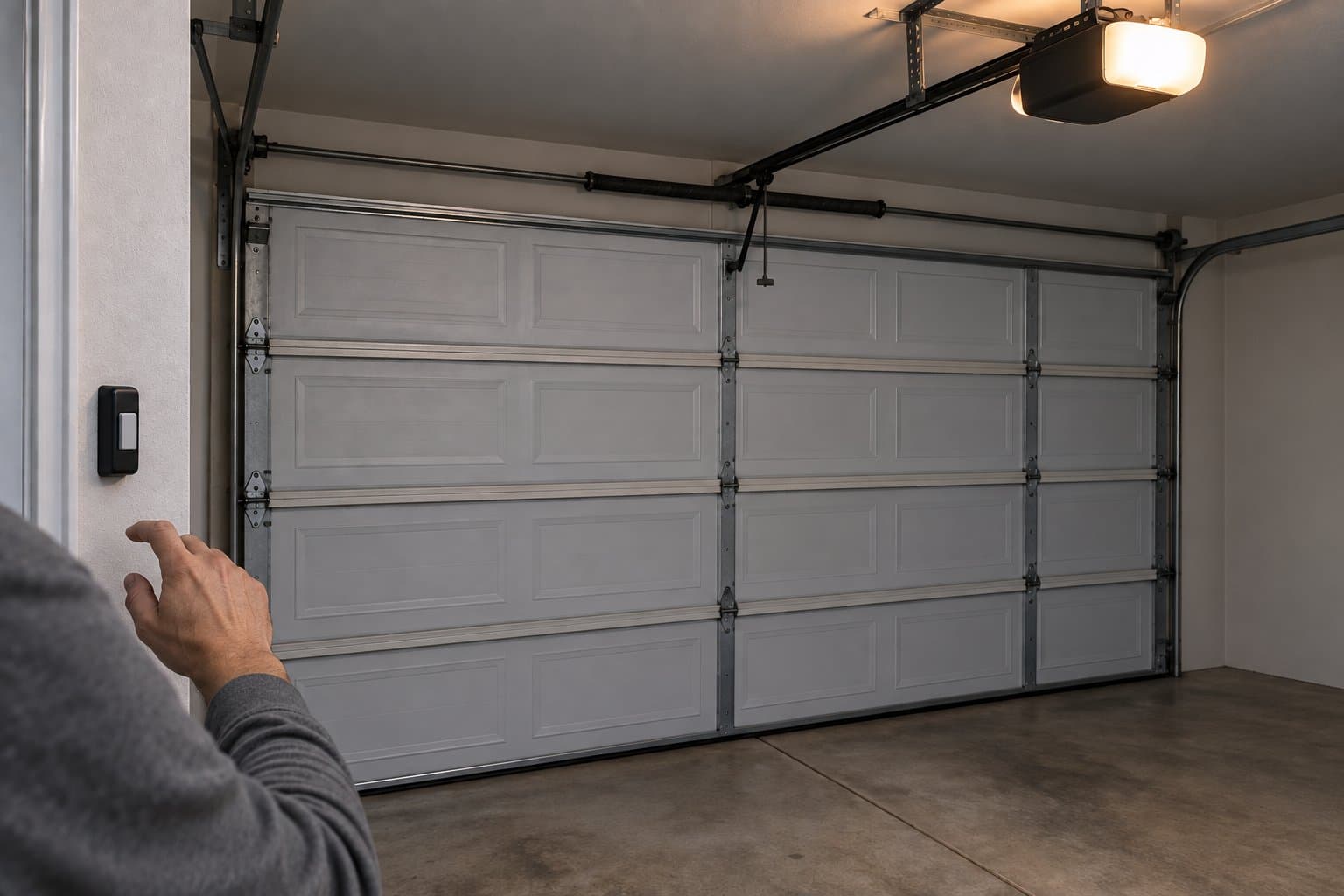
Fort Lauderdale is hard on the metal parts that make a door move. Salt air off the Atlantic and the city's hundreds of miles of canals corrodes springs, cables, rollers and tracks far faster than inland, and waterfront homes often need this hardware serviced years earlier than the manufacturer's averages suggest. Add year-round heat and high humidity, which rust hinges and fasteners and chew up weatherstripping, plus storm-season power cuts and surges that kill openers and un-pair remotes, and a door that worked fine last week can sit there dead today.
While you wait — please don't
- Stop using the door. A door with a failed spring, a loose cable or a panel that is sitting crooked gets worse every time it is run, and a crooked door that keeps being forced can come off its track.
- Do not touch the springs or cables. They hold enormous tension even when the door is down, and releasing it by accident causes serious injury — this is not a job to attempt yourself.
- Do not bypass or tape over the safety sensors. Defeating the sensors removes the one thing that stops the door closing on a child or a pet.
- Do not keep hitting the button. Repeated attempts against a jam strain the opener drive and can turn a single failed part into several.
- Do not move the car out from under it. If the door is stuck partway and the car is underneath, leave it and let the technician secure the door first.
What the technician does
- Find the real fault firstThe technician works out which of the spring, cable, opener or safety sensor is actually at fault before quoting anything. A door that will not move has one cause more often than four.
- Spring and cable inspectionSprings and cables get checked for breaks, stretch and salt corrosion, which is common on Fort Lauderdale waterfront properties. Anything unsafe is called out before the door is operated again.
- Safety sensor realignment and testingThe floor-level sensors get re-aimed, cleaned and tested through a full cycle. Damp and dust knock them out of line, and a sensor that is only slightly off will stop the door every time.
- Opener drive diagnosisThe motor, drive and remote pairing get tested, since surges and power cuts can take out the board or wipe the remotes while the door itself is fine.
- Rebalancing the doorWith the opener disconnected, the door should hold its position by hand. If it drops or climbs, the balance is off and the opener has been carrying weight it was never meant to.
- Price before workThe estimate is free. The technician looks at the door, gives you the price, and you approve it before anything starts.
Why this happens in Fort Lauderdale, FL
Much of Fort Lauderdale's single-family stock is 1950s–1970s concrete block and stucco on slab, with attached one- and two-car garages. Those doors and their hardware are often older than the current code, and in neighborhoods like Rio Vista, Las Olas Isles, Coral Ridge and Sailboat Bend the salt spray is relentless. Corroded cables and tired springs are the classic reason a door in this city stops moving.
Season matters too. Hurricane season runs June 1 to November 30, and that is when wind, wind-driven rain and power problems do the most damage to openers and door hardware — it is also when demand for wind-rated doors and storm prep peaks. From November to April, seasonal residents come back to homes that sat shut for months, and a humid garage is a good place for sensors to drift and metal to seize. In Broward County, which sits in the High-Velocity Hurricane Zone, replacement doors generally need approved product documentation and a permit, so if the fix turns into a new door the technician will go over what your local building department requires.
Questions people ask
- The opener hums but the door does not move. What is that?
- That usually points at a broken spring or a snapped cable rather than the opener itself. The motor is trying to lift a door that has lost the counterbalance holding its weight. Stop running it and have it looked at.
- Why do the safety sensors fail so often here?
- Fort Lauderdale's humidity and garage dust settle on the lenses and the brackets work loose, so the beam no longer lines up. The door will refuse to close and the opener light will usually flash. Realignment and testing is part of the visit.
- A storm knocked the power out and now the remote does nothing.
- Surges and outages during storm season can damage opener boards and un-pair remotes. Sometimes it is a reprogram, sometimes the drive is done. The technician tests the opener before quoting so you are not paying for guesswork.
- Can I just pull the red release cord and lift it myself?
- Not if a spring or cable has failed or the door is sitting crooked. Without the counterbalance the door is extremely heavy and can drop. Leave it alone and let a technician secure it.
- Who actually turns up?
- One Call Garage Door is a referral and scheduling service. We arrange the job with an independent local technician — we are not the contractor and we do not perform the work. Licensing is the technician's own, and in Florida requirements vary by county and city.
One call
One call to (866) 394-4210 and we arrange a Fort Lauderdale garage door technician to look at why your door will not move. The estimate is free, and you approve the price before any work starts.
Something else in this area
One Call Garage Door arranges the visit; the technician does the work and gives you the price.