
What causes a garage door opener to close the door then immediately open it again?
The opener thinks something is in the way, so it reverses. The usual causes are a blocked or misaligned safety sensor, a close limit set so the door seems to hit the floor early, or a door that is binding or heavy enough to make the opener feel resistance.
Phones answered around the clock · free estimate
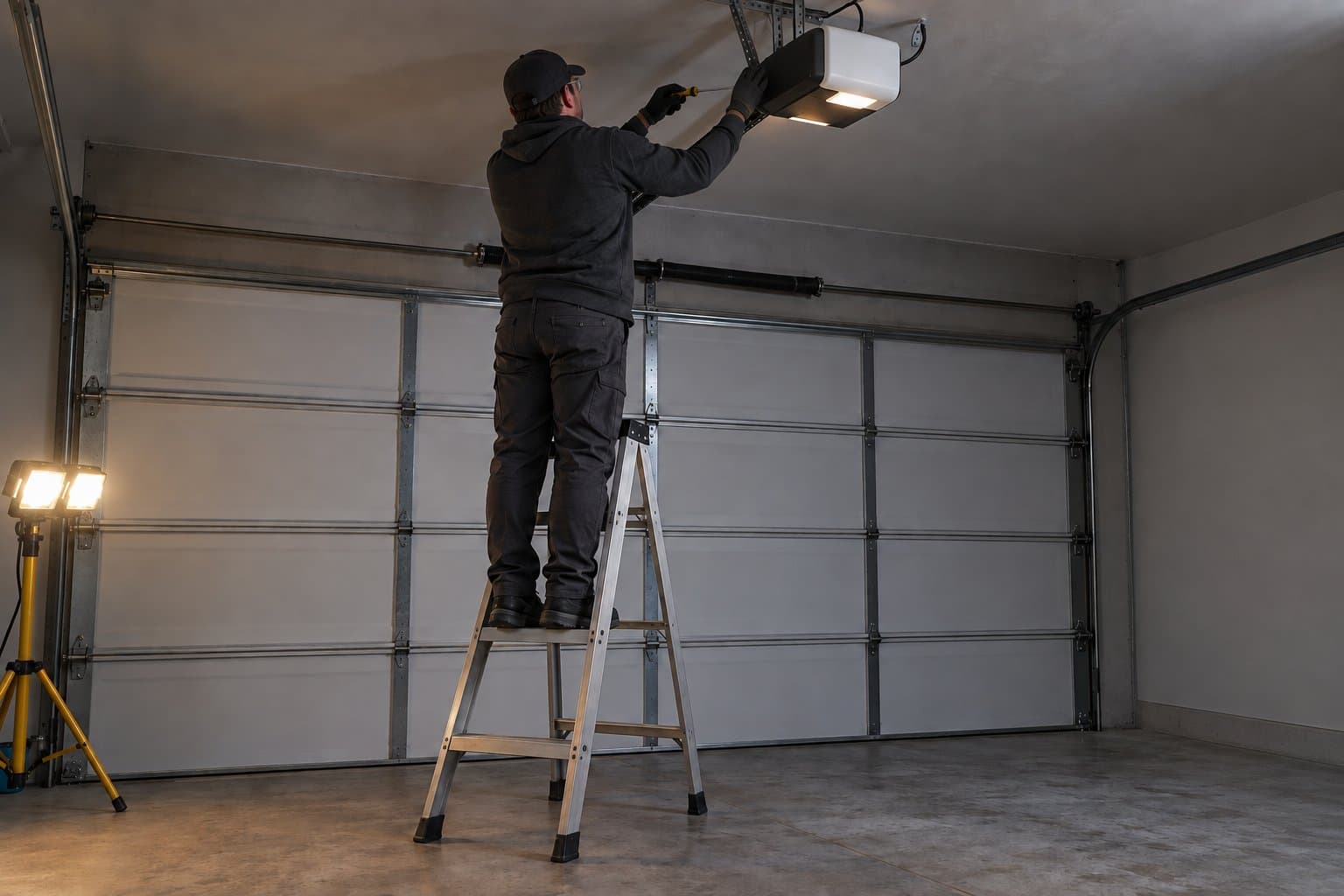
Where the door reverses tells you a lot. If it reverses before it touches the floor, suspect the sensors. If it reverses as it touches the floor, suspect the close limit or force settings, or something on the floor. If it struggles all the way down, the door itself may be the problem, not the opener.
Why it happens
Every opener has a safety reversal. Two photo-eye sensors near the floor send a beam across the opening. If the beam breaks, the opener stops and reverses. A dirty lens, a bumped bracket, direct sun on a lens or something leaning in the beam path can all trigger it. Some openers also flash or blink their lights when the sensors are the issue.
The opener also tracks how far the door travels and how hard it is working. The close limit tells it where the floor is. If the limit is set too short, the opener may sense the door stopping early and treat it as an obstruction. If the force setting is too sensitive, a small amount of friction can cause a reversal. Limits and force can drift over time, or change after a power surge, a weather swing or a repair.
The third group of causes is mechanical. A door that binds in the track, has worn rollers or is out of balance because of its springs makes the opener work harder than it should. An opener is not a lift, and it cannot make up for a door that is heavy because of its springs. Adjusting the opener to ignore that resistance would only hide the problem and wear the opener out faster. A failing logic board or limit switch can also give false readings, but that is less common than the causes above.
What you can check yourself
- Look at the sensorsCheck the two small eyes near the floor on each side of the door. Each usually has an indicator light that should be steady. Wipe each lens with a soft cloth and look for anything blocking the beam.
- Check for something on the floorA leaning tool, a pile of leaves, a bag or a lip of ice under the door can cause a reversal at the floor. Clear the path and try again.
- Watch where it reversesNote whether the door reverses high up, at the floor or partway down, and whether it moves smoothly or in jerks. That detail helps the technician narrow the cause.
- Look for obvious damageFrom a distance, look for a crooked door, a visible gap in a spring or a cable hanging loose. If you see any of these, stop using the door and leave it alone.
- Try the wall buttonCompare the wall button with the remote. If both reverse the door the same way, the cause is in the opener, sensors or door, not the remote.
When to call a technician
Call if cleaning and realigning the sensors does not help, if the door reverses with a clear floor, or if it struggles, shakes or looks uneven on the way down. Springs, cables and track are under tension and are not a homeowner repair. If the door seems heavy, stop using it and have a technician look. Do not keep pressing the button and forcing the opener to try again.
A repair like this almost never needs a building permit. Whether garage door work requires a state contractor license varies by state, and many states leave it to the city or county. The technician holds whatever license their state requires, and your state's contractor licensing board is the place to verify it. Call One Call Garage Door at (866) 394-4210 and we will arrange a visit with an independent local technician. The estimate is free, and the technician gives you the price in person before any work starts.
What the technician will do
- Find the cause firstThe technician watches the door run, then separates a sensor problem from a limit or force problem and from a door that binds or is out of balance.
- Correct sensors and settingsThat can mean realigning or replacing sensors, repairing wiring, and resetting the travel limits and force so the door closes fully without false reversals.
- Repair worn opener partsIf a limit switch, logic board or gear kit is the cause, the technician can tell you whether a repair makes sense.
- Fix the door if it is the sourceIf the opener is straining because of springs, rollers or track, the technician addresses the door itself, since adjusting the opener would not solve it.
- Give the price before work beginsYou see the price after the technician has looked at the door, and you approve it before anything is done. That includes the choice between repair and replacing the opener.
Related questions
- Why does the opener light blink when the door will not close?
- On many openers, blinking lights or a series of flashes point to a sensor problem, such as a blocked, dirty or misaligned eye or a damaged wire. Check the sensor lights and lenses first. If they look fine, a technician can read the fault.
- Can a power surge cause this?
- Yes. Lightning storms and power surges can damage the logic board, which can cause odd behavior such as false reversals or a door that stops responding. A technician can test the board and tell you if it is worth repairing.
- Is it safe to keep using the door if it reverses?
- The reversal is a safety feature working as designed, so do not disable it. If the door only reverses because of a blocked sensor, it is fine once the sensor is cleared. If it is heavy, crooked or noisy, stop using it and have it looked at.
- Does an opener that keeps reversing need to be replaced?
- Not usually. Most causes are sensors, settings or a door problem, and those are repairs. Replacement makes sense when parts are worn out or no longer made, and the technician will explain that when they give the estimate.
Get a technician out
Free estimate. The price is agreed before the work starts.
Keep reading
- The problemThe opener or the remote has stopped working
- AnswerWhy does my garage door open a few inches and then stop and reverse?
- AnswerWhat does it mean when the opener light blinks but the door will not move?
- AnswerWhy does my garage door opener work with the wall button but not the remote?
- Every question we have answered
Or send us a message
Leave your details and what the door is doing, and someone from the team will call you back.
One Call Garage Door arranges the visit; the technician does the work and gives you the price.