
Why does my garage door open a few inches and then stop and reverse?
The opener is almost always reacting to a door that is too heavy or is binding. When it senses more resistance than it expects, it stops and reverses as a safety response. The usual cause is a problem in the door's hardware, such as a broken spring, a cable, or a roller or track issue, not the opener itself.
Phones answered around the clock · free estimate
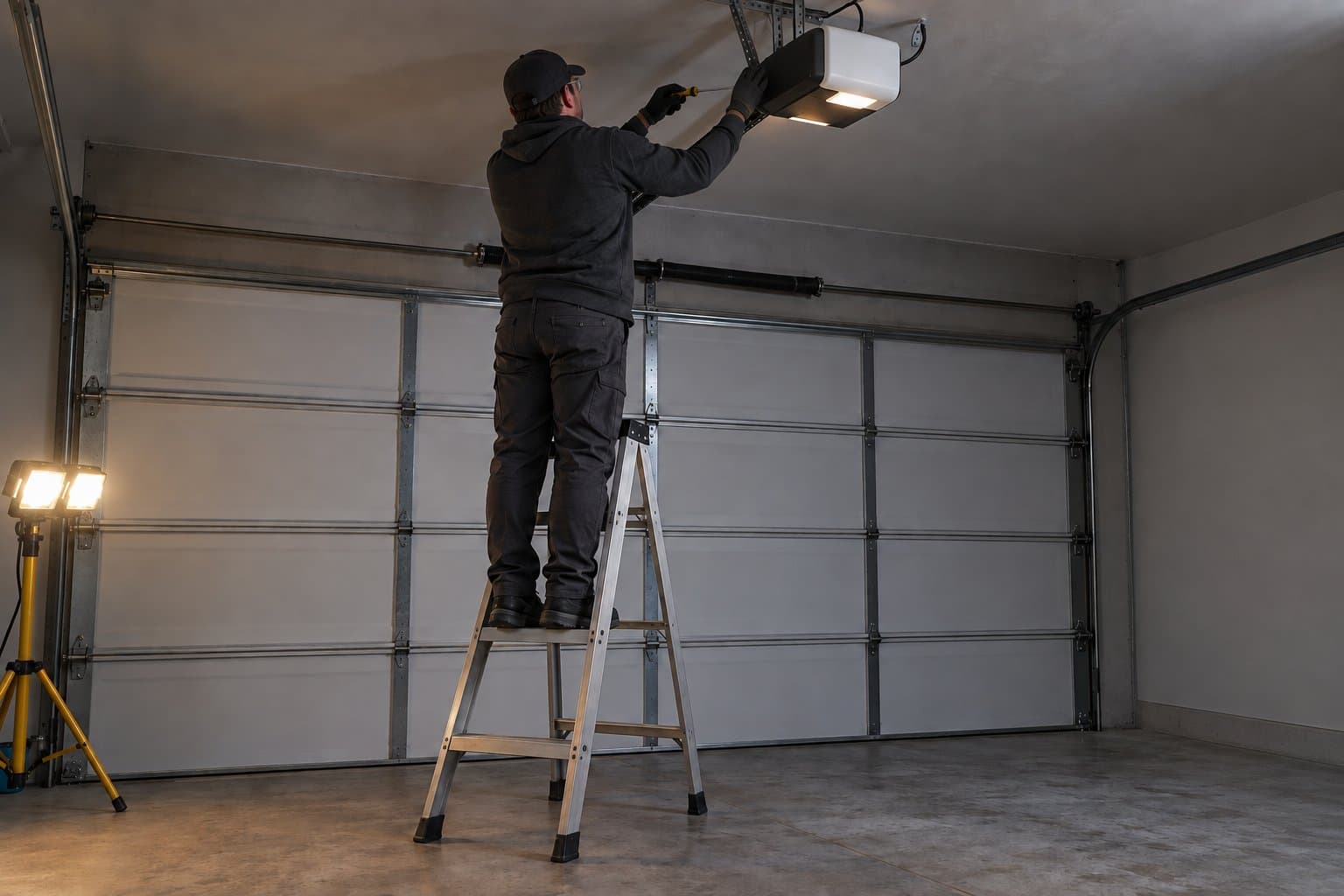
Less often, the opener is the problem. Its travel or force settings may be off, or a worn part or failing logic board may be misreading the load. A garage door technician can tell which it is by looking at the whole system.
Why it happens
An opener is built to guide a door that is already balanced by its springs. It is not a lift. The springs carry nearly all the weight, and the opener only moves the door along. If a spring has broken or lost tension, the door becomes very heavy, the motor strains, and the opener shuts the cycle down to protect itself and you.
A door that is binding gives the same result. A bent track, a roller that has jumped, a cable that has slipped, or a door that has shifted out of line can all create resistance a few inches into the lift. The opener reads that resistance as an obstruction and reverses.
If the springs and track are fine, the cause may be in the opener. Force and travel limits can drift or be set wrong. A worn gear or a logic board damaged by a power surge can also make the opener misjudge the load. Each of these is a different repair, which is why the cause matters before anything gets replaced.
What you can check yourself
- Look at the springsFrom the floor, look at the spring above the door, or the springs along the sides. A visible gap in the coil means a broken spring. Do not touch it, and stop using the door.
- Look at the cables and trackCheck that no cable is hanging loose and that the door is not crooked or out of its track. If either is true, leave the door alone and do not run the opener.
- Look for obstructionsCheck that nothing is lying in or against the tracks, and that nothing is leaning on the door's edge. Clear any obvious debris from the floor and the base of the door.
- Listen to the motorA motor that hums or strains and then quits points to a load problem. A motor that spins while the door does not move points to a stripped drive gear. Stop pressing the button if you hear that, because repeated attempts can burn out the motor.
- Check the wall button and sensorsMake sure the sensor lenses near the floor are clean and aligned, and that the wall control isn't stuck. This rules out the simple causes, though sensors usually matter more when the door is closing.
When to call a technician
If you see a gap in a spring, a loose cable, or a door that sits crooked in its track, stop using the door and do not try to fix it yourself. Springs and cables hold a great deal of tension, and this is not work for a homeowner. Repeatedly pressing the button against a heavy door also wears out the opener.
If the hardware looks fine and the problem keeps coming back, it is time to have someone look at the opener's settings and parts. One Call Garage Door is a referral and scheduling service. We arrange the visit with an independent local technician, and the estimate is free. The technician looks at the door and gives you the price before any work starts, and you approve it first. Call (866) 394-4210.
Repairs to springs, cables, rollers or an opener almost never need a building permit. Licensing rules for garage door work vary by state, and many states leave it to the city or county. The technician holds whatever license their state requires, and you can verify that with your state's contractor licensing board.
What the technician will do
- Check the door's balance and hardwareThe technician inspects the springs, cables, rollers and track to see whether the door is moving freely. This tells them whether the opener is working against a heavy door.
- Repair what failedIf a spring, cable or roller is the cause, that part is repaired or replaced. The opener often works normally again once the door is balanced.
- Test the opener itselfIf the door is sound, the technician checks the limit switches, drive gear and sprocket, and the logic board. Gear and sprocket kits, boards, capacitors and limit switches can be replaced where that makes sense.
- Replace the opener if repair is not sensibleIf the opener is worn out or too old to repair sensibly, the technician can quote a replacement, along with remotes, keypads and phone control setup.
Related questions
- Can I just turn up the opener's force setting?
- That is the wrong fix when the door is heavy because of a broken spring. It makes the opener push harder against a problem it should not be pushing against, and it can defeat a safety response. Have a technician find the cause first.
- Is it safe to lift the door by hand if the opener will not work?
- Not if you suspect a broken spring, a loose cable, or a door that is off its track. In those cases the door can be very heavy or unstable. Leave it where it is and call a technician.
- Does a power surge cause this?
- It can. Lightning storms and surges can damage the opener's logic board, which can make it misread the load or act erratically. A technician can test the board before deciding whether it needs replacing.
- Will a new opener fix a door that is hard to lift?
- No. An opener is not a lift, and a door that is heavy because of its springs will not be cured by a new motor. The spring or other hardware problem has to be repaired first.
Get a technician out
Free estimate. The price is agreed before the work starts.
Keep reading
- The problemThe opener or the remote has stopped working
- AnswerWhat causes a garage door opener to close the door then immediately open it again?
- AnswerWhat does it mean when the opener light blinks but the door will not move?
- AnswerWhy does my garage door opener work with the wall button but not the remote?
- Every question we have answered
Or send us a message
Leave your details and what the door is doing, and someone from the team will call you back.
One Call Garage Door arranges the visit; the technician does the work and gives you the price.