
What causes a squealing or screeching sound every time the door moves?
A squeal or screech on every cycle is almost always metal rubbing on metal because something is dry or worn. The usual suspects are the rollers, the hinges, the bearings at the ends of the shaft, or the opener chain.
Phones answered around the clock · free estimate
The nuance is how the noise started. A noise that crept up gradually is normal wear and a fairly simple fix. A sudden new bang, scrape or pop is different. Stop using the door when that happens.
Why it happens
A garage door is a lot of moving metal. Rollers turn in the track, hinges flex at every panel joint, and bearings carry the shaft the door's weight hangs on. When the lubrication dries out or a part wears, the metal grabs and releases rapidly. That is the squeal you hear.
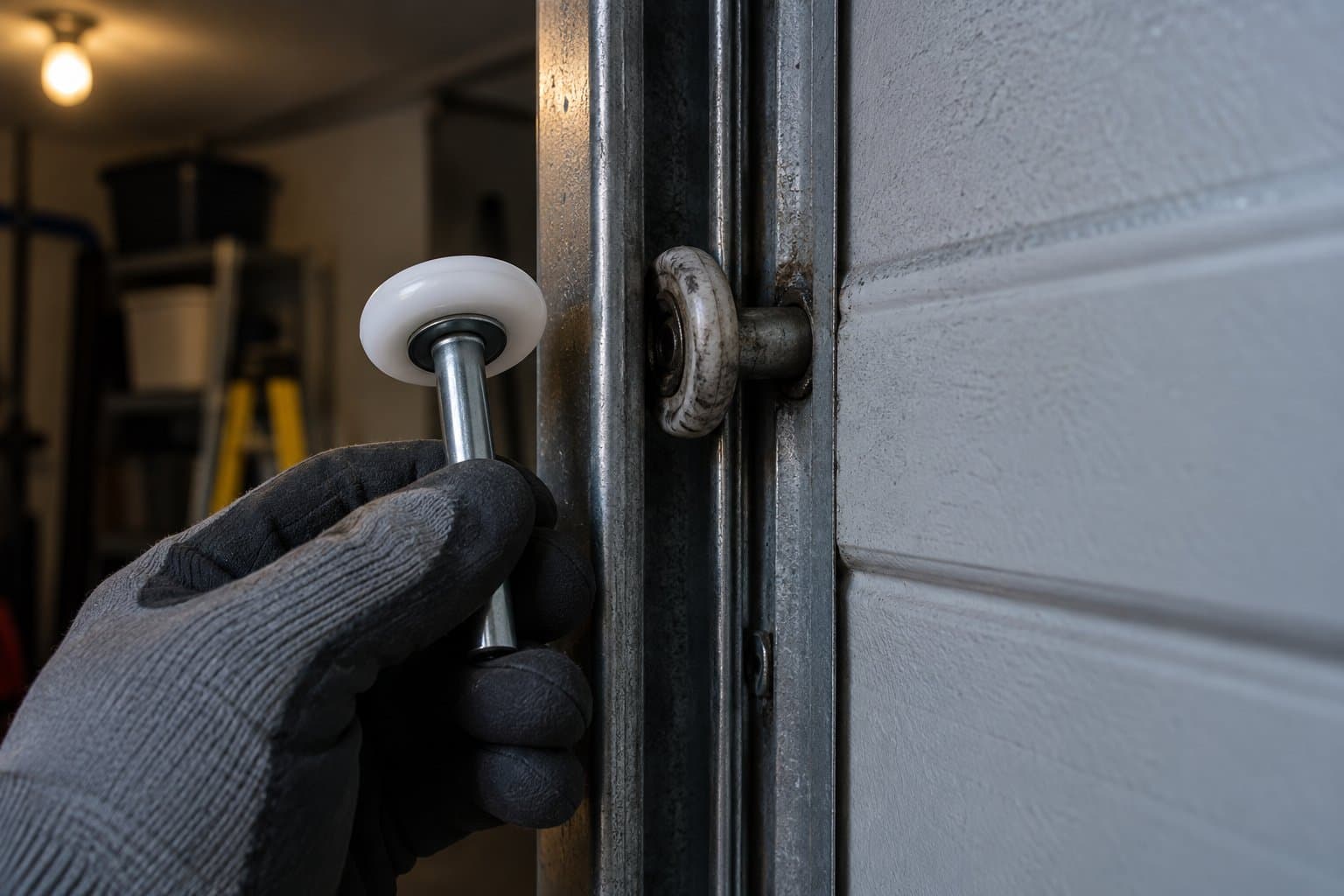
Worn rollers are the most common source. Old rollers can seize or wobble in the track, and the whole door may shake as it moves. Loose hardware adds to it. Bolts and brackets work loose from the constant vibration, and loose parts rub and rattle.
Lubrication can also be the problem in reverse. Grease on the track collects dust and grit, which makes the noise worse and wears the rollers faster. It helps to know which part is making the sound before anyone reaches for a spray can.
Noise is the cheap stage of a garage door problem. Worn rollers and loose hardware are what put doors off track later, so a squeal is worth dealing with while it is still only a noise.
What you can check yourself
- Listen to where it comes fromStand inside the garage and run the door. A sound that travels along the sides points to rollers or track. A sound at the top or ends points to bearings or hinges. A sound from the motor unit points to the opener.
- Look at the trackCheck for built-up grease, dirt or debris, and for any visible bend or gap. Do not grease it. Only look.
- Look at the rollers and hingesFrom the floor, see whether any roller looks cracked, wobbly or worn flat, and whether hinges look rusty or loose. Do not touch anything under tension.
- Watch the door's movementNote whether it moves smoothly, jerks, shakes or hangs crooked. Jerking or tilting means more than dry metal.
- Look at the springs and cables, from a distanceCheck whether a spring shows a visible gap or a cable hangs loose. If either does, stop using the door and do not try to fix it yourself. Springs and cables hold enough stored force to injure someone.
When to call a technician
Call a pro if the noise started suddenly, if the door shakes, jerks or sits crooked, or if you can see a spring gap or a loose cable. Stop using the door in those cases. Spring, cable and track work is not a homeowner repair. A technician has the tools and training to do it safely. To arrange a visit, call One Call Garage Door at (866) 394-4210. We arrange the visit with an independent local technician, and the estimate is free.
Garage door repair of this kind almost never needs a building permit. Whether the work requires a state contractor license varies by state, and many states leave it to the city or county. The technician holds whatever license their state requires. You can verify it with your state's contractor licensing board.
What the technician will do
- Find the source of the noiseThe technician runs the door and inspects the rollers, hinges, bearings, track and opener to see which part is actually making the sound.
- Replace worn rollersWorn rollers are commonly swapped for nylon rollers, which run quieter and wear more gently in the track.
- Service hinges, bearings and the shaftMoving parts are serviced and the hardware is retightened so nothing rattles or binds.
- Restore balance and fix the opener sideThe technician restores the door's balance. The chain is tensioned, or a belt drive can be fitted where quiet matters.
- Give the price firstAfter looking at the door, the technician gives the price in person. Nothing starts until you approve it.
Related questions
- Will lubricating the door make the squeal stop?
- Sometimes, but it only masks the problem if a roller or bearing is worn out. Grease on the track collects grit and can make things worse. A technician can tell you which parts need lubrication and which need replacing.
- Is a squealing door dangerous to use?
- A gradual squeal is usually a wear issue, not an immediate hazard. A sudden bang, scrape or pop, a crooked door, or a visible spring gap is the point to stop using the door and call a technician.
- What decides the cost of fixing a noisy door?
- The main factors are the size and weight of the door, which parts are worn, and whether those parts are still made. What the technician finds on inspection also matters. The estimate is free and the price is confirmed before work starts.
- Does fixing a noisy door need a permit?
- Repairs like rollers, hinges and opener work almost never need one. A full door replacement can, depending on the city, and in coastal high-wind zones. Ask your local building department before ordering a new door.
Get a technician out
Free estimate. The price is agreed before the work starts.
Keep reading
Or send us a message
Leave your details and what the door is doing, and someone from the team will call you back.
One Call Garage Door arranges the visit; the technician does the work and gives you the price.