
Why does my garage door rattle hard enough to vibrate the wall?
A garage door that shakes the wall is almost always running on worn rollers, loose hardware, or both. The door and opener are bolted to the framing around the opening, so every rattle travels straight into the wall.
Phones answered around the clock · free estimate
One thing changes the answer: how the noise started. A gradual rumble that got worse over months is wear. A sudden new bang, scrape or pop is different. If that is what you heard, stop using the door.
Why it happens
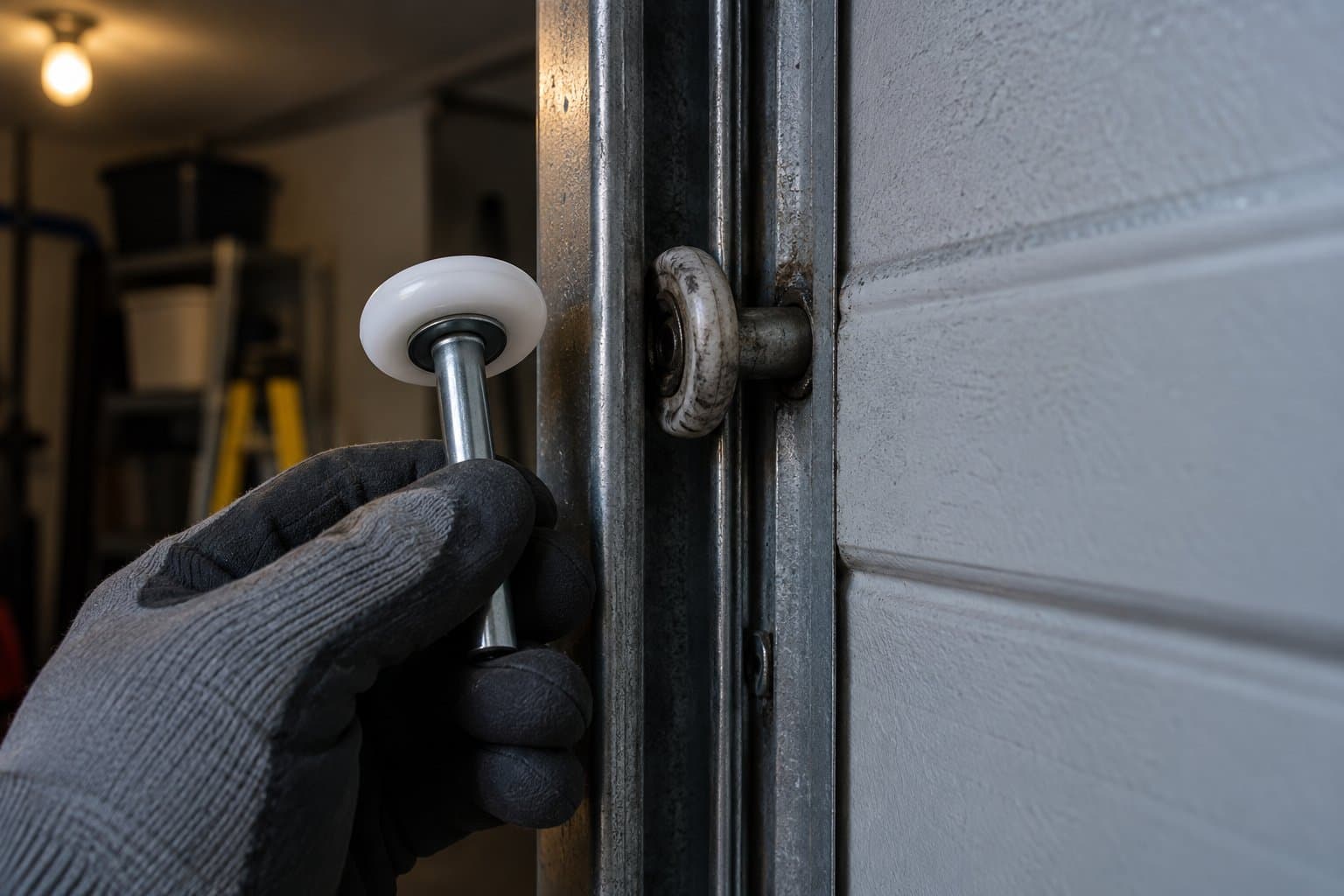
Rollers carry the door up and down the track, and they wear out. Once the bearings loosen or the wheels develop flat spots, they knock along the track instead of rolling. Add hinges that have run dry and bolts that have worked loose over thousands of cycles, and the whole door starts to buzz and shake as it moves.
The parts above the door matter too. Shaft bearings, the opener's rail and its mounting, and a slack chain can all rattle. Because they are fastened to the header and the wall, the vibration reaches the house. A door that is out of balance also makes the opener strain, which adds shake.
Grease on the track makes this worse, not better. It collects grit and turns into a gritty paste the rollers have to push through. Noise is the cheap stage of a garage door problem. Worn rollers and loose hardware are the same things that let a door slip off its track later.
What you can check yourself
- Listen for where it comes fromStand inside and run the door. Note whether the noise is at the sides along the tracks, overhead at the opener, or at the top near the shaft. That helps the technician find it faster.
- Note how it startedSlow worsening points to wear. One loud bang, scrape or pop followed by a new shake does not. In that case, leave the door alone.
- Look at the tracks and rollersLook for grit, heavy grease, or a roller that wobbles or sits crooked. Look only. Do not spray or smear anything on the track.
- Look at the springs and cablesFrom a distance, check for a visible gap in a spring or a cable hanging loose. If you see either, stop using the door and do not touch them.
- Check the wall sideSee whether the vibration is strongest where the opener rail attaches to the header. That points to the opener or its mounting rather than the door itself.
When to call a technician
Call a pro if the door shakes enough to rattle the wall, since that means hardware is already loose or worn. Call right away, and keep the door unused, if you see a spring gap, a loose cable, a crooked door or a door that has come off its track. Do not tighten or adjust anything near the springs, cables or bottom brackets yourself. Those parts hold a lot of tension and the repair belongs to a technician.
One Call Garage Door arranges the visit with an independent local garage door technician. The estimate is free. The technician looks at the door and gives you the price before any work starts, and you approve it first. Call (866) 394-4210. Whether garage door work needs a state contractor license varies by state. The technician holds whatever license their state requires, and your state's contractor licensing board is the place to verify it. A repair like this almost never needs a building permit.
What the technician will do
- Replace worn rollersWorn rollers are swapped for nylon ones, which run quieter along the track and put less shake into the wall.
- Service hinges, bearings and the shaftMoving parts are checked and serviced so they stop knocking and binding.
- Retighten the hardwareLoose track brackets, hinges and mounting bolts are secured, which is often most of the shaking.
- Restore balanceThe technician checks that the door is balanced, so it moves smoothly and the opener is not straining.
- Tension the chain or fit a belt driveA slack chain gets tensioned. Where quiet matters, such as a shared bedroom wall, a belt drive can be fitted.
Related questions
- Will lubricating the track stop the rattle?
- No. Grease on the track collects grit and usually makes the noise worse. A technician lubricates the right moving parts and replaces rollers that are worn out.
- Is a belt drive opener quieter?
- Generally yes. A belt drive runs more quietly than a chain, which helps when a bedroom or living space shares a wall with the garage. It will not fix worn rollers or loose hardware, so those need attention too.
- What decides the cost of fixing a noisy door?
- The size and weight of the door, which parts are worn, whether replacement parts are still made, and what the technician finds once they look. The technician gives you the price in person before any work starts.
- Can a noisy door eventually come off its track?
- Yes. Worn rollers and loose hardware are common reasons a door jumps its track later. Fixing the noise early is usually the simpler repair.
- Does fixing a rattling door need a permit?
- Repairs like rollers, hardware and openers almost never do. A full door replacement can in some cities. Ask your local building department before ordering a new door.
Get a technician out
Free estimate. The price is agreed before the work starts.
Keep reading
- The problemThe door has become loud, grinding or shaky
- AnswerWhy does my garage door scrape against the track as it closes?
- AnswerWhat does a popping sound from the garage door spring shaft mean?
- AnswerWhat causes a squealing or screeching sound every time the door moves?
- Every question we have answered
Or send us a message
Leave your details and what the door is doing, and someone from the team will call you back.
One Call Garage Door arranges the visit; the technician does the work and gives you the price.