
What does a popping or snapping noise from a dented garage door section mean?
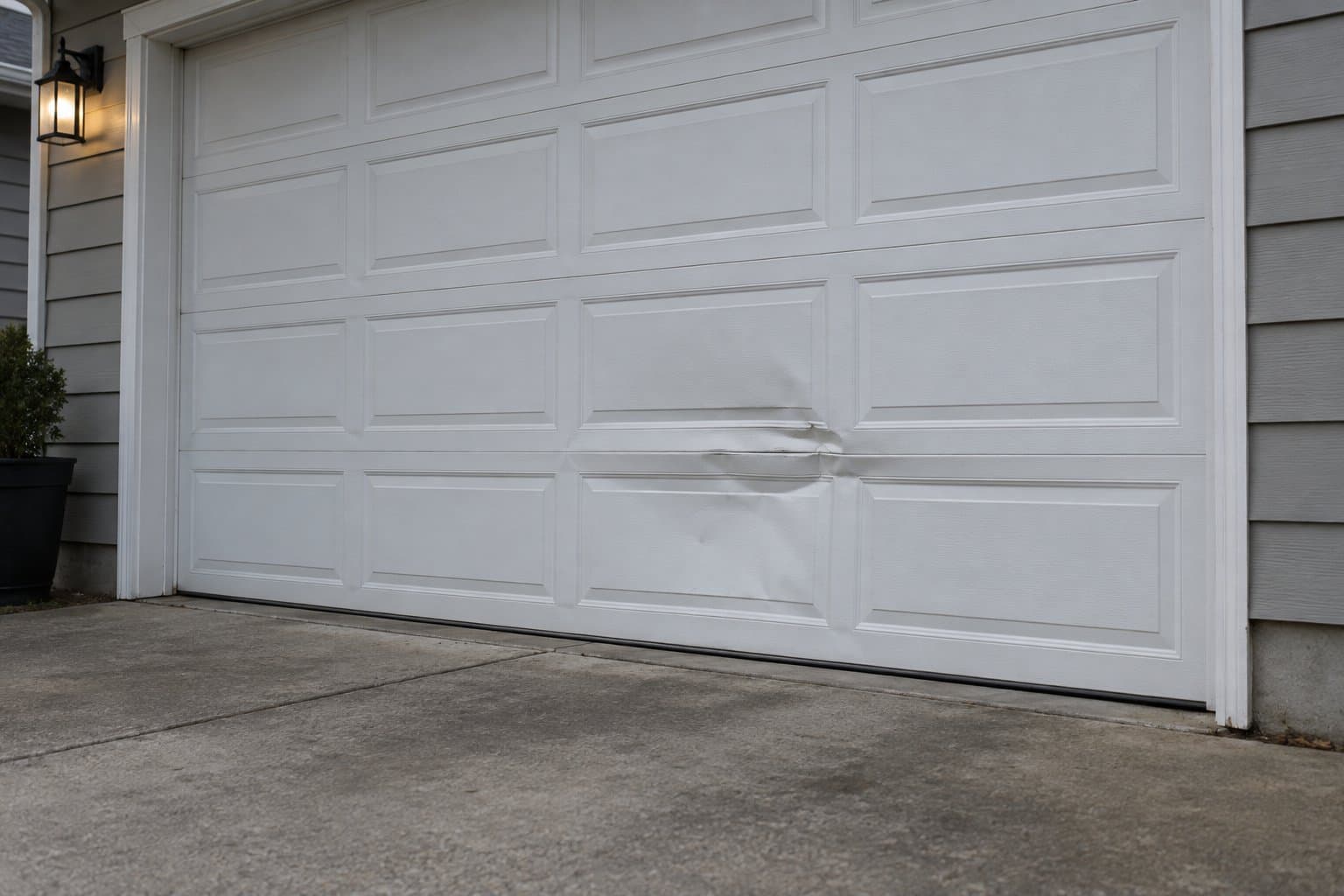
A popping or snapping noise from a dented section usually means the bent metal is flexing at the crease, or the dent is twisting the section and straining the hinges and rollers next to it. The panel is no longer holding its shape, and the door is telling you.
Phones answered around the clock · free estimate
The noise does not always come from the dent. A sharp bang or snap can also be a spring or cable problem. If you see a gap in a spring, a cable hanging loose, or the door crooked in its track, stop using the door and do not try to fix it yourself.
Why a dented section makes noise
A garage door section gets its stiffness from its shape. A crease or sharp bend breaks that shape. When the door moves, the metal around the crease flexes back and forth and can pop as it shifts. The noise tends to repeat at the same point in the travel.
A bent section also pulls on the parts around it. Hinges are mounted across the joints between sections, and the rollers ride in the track. If the section is bowed or out of square, those parts can bind and then release with a snap. Over time this can loosen mounting points, crack the metal near a hinge, or push a roller out of line.
That is why a creased panel weakens the whole door, even while the door still runs. The usual causes are a vehicle bumping the door, which can happen anywhere, and in some regions hail or storm debris. The longer a damaged section keeps cycling, the more stress it passes to the sections beside it.
What you can check yourself
- Look at the crease from a safe distanceWith the door closed, look along the dent for cracks, torn metal, or a section that bows in or out. Do not push on the dent or try to bend it back.
- Watch and listen while the opener runs the doorStand clear and note where in the travel the noise happens. Does it come from the dent, or from a spring, a cable, or the track? A technician can use that detail.
- Look at the hinges and rollers near the dentCheck for hinges that look bent or pulled away, and for rollers that sit crooked or out of the track. Look only. Do not adjust anything.
- Check the springs and cables by eyeA visible gap in a spring or a cable hanging loose means the door should stay shut and unused until a technician looks at it.
- Take photos and note the door's detailsPhotograph the damage and any label or markings on the door. Whether the panel can be replaced depends on whether it is still made, and photos speed that up.
When to call a technician
Call a technician if the noise repeats, the section is creased or bowed, a hinge or roller looks damaged, or the door no longer sits level. Stop using the door if it is rubbing, crooked, or off its track. Springs and cables are under high tension, and repairs near them are for a trained pro, not a driveway fix.
Replacing a damaged section is normally a repair, and repairs almost never need a building permit. Replacing the whole door can need one in some cities, and in most coastal high-wind and hurricane zones. If the answer turns out to be a new door, ask your local building department before you order. The technician holds whatever license your state requires, and your state's contractor licensing board is where you verify it. To set up a visit, call One Call Garage Door at (866) 394-4210. We arrange the visit, and the technician gives you the price in person.
What the technician will do
- Inspect the section and the door around itThe technician checks how far the damage reaches and whether the rest of the door is sound.
- Check whether the panel is availableNewer doors often have matching sections. Older or discontinued doors often cannot be matched, which can change the plan.
- Replace a single section or add strutsWhere the rest of the door is sound, one section can be replaced. Where a section has bowed, struts can add back stiffness.
- Check for knock-on damageTrack rollers and hinges beside the damage are checked and replaced if they were hurt in the same impact.
- Give you the price before work startsThe estimate is free. You approve the price first, and only then does the work begin.
Related questions
- Is it safe to keep using the door?
- It may run for a while, but a creased section strains the hinges and rollers every cycle. If the door rubs, leans, or comes off the track, stop using it and call a technician.
- Can one panel be replaced, or do I need a whole new door?
- Often one section can be replaced if the rest of the door is sound and the panel is still available. If the door is older and discontinued, a match may not be possible, and the technician will go over the options.
- Will a replacement section match my existing door?
- On a current model it usually can. On an older door, color, texture, and profile may not line up, and the technician can tell you on site what is realistic.
- Do I need a permit to replace a damaged panel?
- A panel or hardware repair almost never does. Replacing the entire door can, depending on your city and especially in high-wind coastal areas. Ask your local building department before ordering a new door.
- Can I bend the dent back out myself?
- It is not a good idea. Forcing the metal can crack it and put more strain on the hinges and the rest of the door. A technician can judge whether the section can be saved.
Get a technician out
Free estimate. The price is agreed before the work starts.
Or send us a message
Leave your details and what the door is doing, and someone from the team will call you back.
One Call Garage Door arranges the visit; the technician does the work and gives you the price.