
Why is rust spreading along the bottom edge of my garage door panel?
The bottom edge of a garage door sits closest to the floor, so it stays wet longer than the rest of the door. Water, snow, ice melt and damp air attack the metal there, and once the paint or coating is scratched or worn through, rust spreads along the edge.
Phones answered around the clock · free estimate
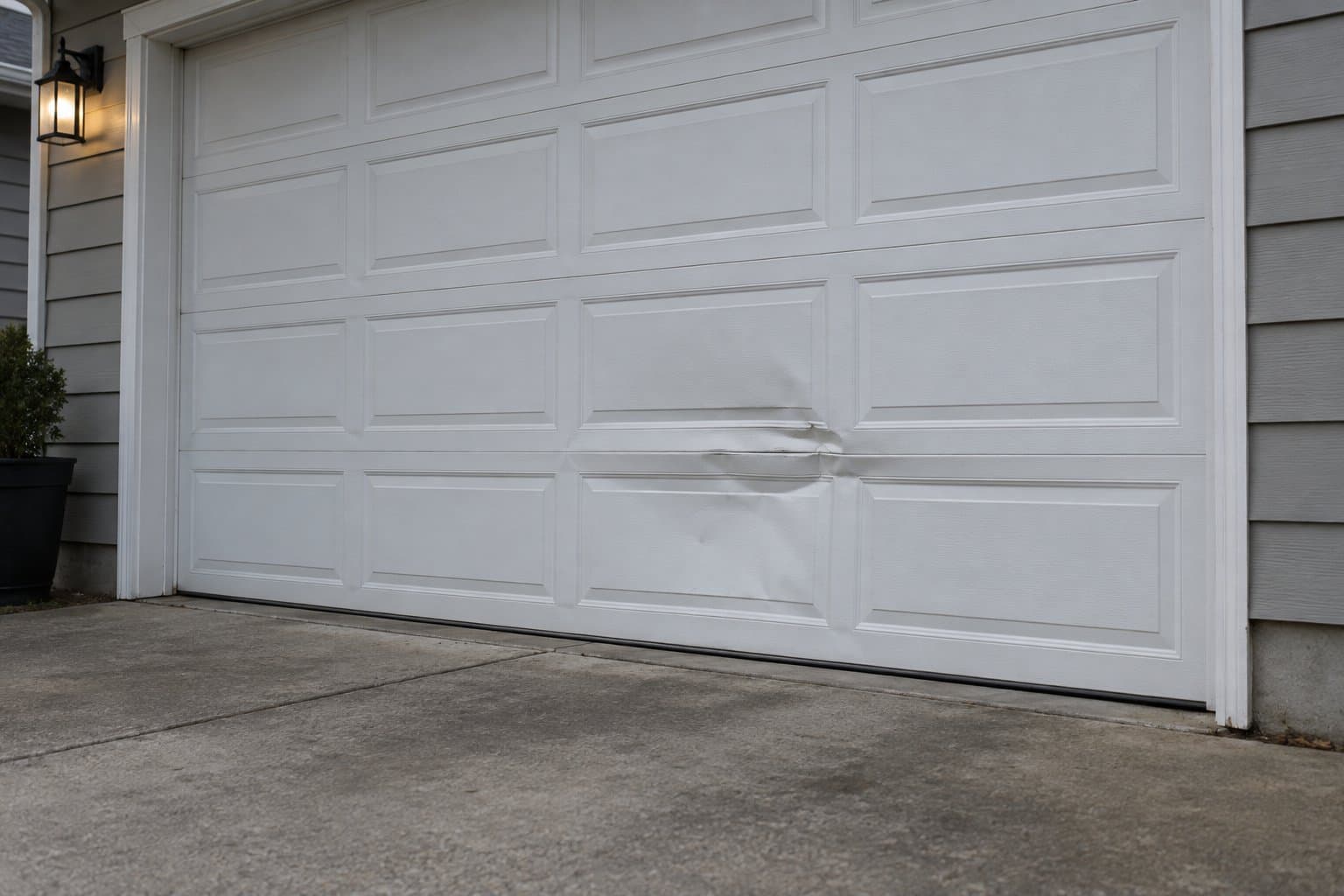
What matters is how deep it has gone. Surface rust on a sound panel can often be dealt with. Rust that has flaked, bubbled or eaten holes through the steel means the panel is losing strength, and a technician should look at it.
Why the bottom edge rusts first
Steel garage door panels are protected by a thin coating and paint. The bottom edge takes the most abuse. It gets splashed by rain, sits in standing water or slush, and is hit by mowers, bikes, shovels and the occasional bumper. Any chip in the coating lets moisture reach bare metal.
The bottom seal makes a big difference. When the rubber or vinyl strip along the bottom is cracked, flattened or missing, water gets trapped between the seal and the panel. That keeps the edge damp for days and speeds rust up. A garage floor that slopes toward the door, or a driveway that drains against it, does the same thing.
Rust spreads because it is not just a surface stain. Rust takes up more room than the steel it replaces, so it lifts paint and exposes fresh metal beside it. That is why a small spot often turns into a line along the whole edge. Older doors, salty winter roads and humid or coastal air all make it quicker. Wood and some other door materials fail differently, with rot or swelling instead of rust, so the material matters.
What you can check yourself
- Look at the bottom sealSee whether it is cracked, torn, flattened or pulling away. A worn seal is often the reason water sits against the panel.
- Judge how deep the rust isLook for flaking, bubbling paint or small holes. Staining and light discoloration are surface problems. Holes or crumbling edges mean the steel is going.
- Check the other panelsIf only the lowest section is affected, a single-section fix may be possible. Rust higher up suggests a wider moisture or coating problem.
- Look at the floor and drainageNotice whether water pools at the threshold after rain or snowmelt. Fixing the cause matters as much as fixing the rust.
- Look, but do not touch, the cornersThe bottom corners hold brackets that connect to the lifting cables, which are under heavy tension. If rust is around them, or a cable looks frayed or loose, stop using the door and leave it alone. Do not try to loosen or remove anything yourself.
When to call a technician
Call a pro if the rust has gone through the metal, if the panel is bowing or the edge is crumbling, or if rust reaches the bottom corners where the brackets and cables attach. A weakened bottom section can let the door twist or bind, and that puts strain on the rollers, hinges and track. If the door is hard to move or sounds different, stop using it until it has been looked at. To arrange a visit, call One Call Garage Door at (866) 394-4210. We set up the visit with an independent local technician, and the estimate is free.
Whether garage door work requires a state contractor license varies by state, and many states leave it to the city or county. The technician holds whatever license their state requires, and you can verify that with your state's contractor licensing board. A single panel replacement almost never needs a building permit. A full door replacement can, in some cities and in most coastal high-wind zones where the new door needs a wind rating. Ask your local building department before ordering a new door.
What the technician will do
- Assess the rustThe technician checks whether it is surface corrosion or has weakened the panel, and whether the damage is limited to the bottom section.
- Check panel availabilityIf the section needs replacing, the technician finds out whether that panel is still made. Older or discontinued doors often cannot be matched.
- Replace a single section where the door is soundIf the rest of the door is in good shape, one section can often be replaced without replacing the whole door.
- Inspect for knock-on damageThe bottom brackets, rollers, hinges and track near the damaged section are checked, since a weak panel can strain them.
- Give the price before work startsThe estimate is free. The price depends on door size and weight, the material, whether the panel is still available, access, and what the technician finds. You approve it before any work begins.
Related questions
- Can I just sand and paint the rust?
- On light surface rust over sound steel, cleaning and repainting can slow it down. If the metal is flaking or has holes, paint will not restore the strength. Have a technician look first.
- Will a new bottom seal stop the rust?
- A new seal keeps water from collecting against the panel, which helps prevent more rust. It does not repair rust that has already formed.
- Do I need a whole new door for a rusted bottom panel?
- Not always. If the rest of the door is sound and the section is still available, a single section can often be replaced. If the door is old and the panel is discontinued, a full replacement may be the realistic option.
- Is a rusty garage door unsafe to use?
- Light surface rust is mostly cosmetic. A rusted-through bottom edge, or rust near the corner brackets and cables, is different. Stop using the door and have it checked.
Get a technician out
Free estimate. The price is agreed before the work starts.
Or send us a message
Leave your details and what the door is doing, and someone from the team will call you back.
One Call Garage Door arranges the visit; the technician does the work and gives you the price.