
What does it mean when my garage door makes a grinding noise?
A grinding noise usually means parts that should roll or pivot smoothly are worn, dry or loose and are rubbing metal on metal. The usual suspects are worn rollers, dry or worn hinges and bearings, loose hardware, or a tired opener chain.
Phones answered around the clock · free estimate
The nuance is how the noise started. A rumble or grind that built up gradually is a repair to schedule. A sudden new bang, scrape or pop is different. Stop using the door and leave it alone until a technician has looked at it.
Why a garage door grinds
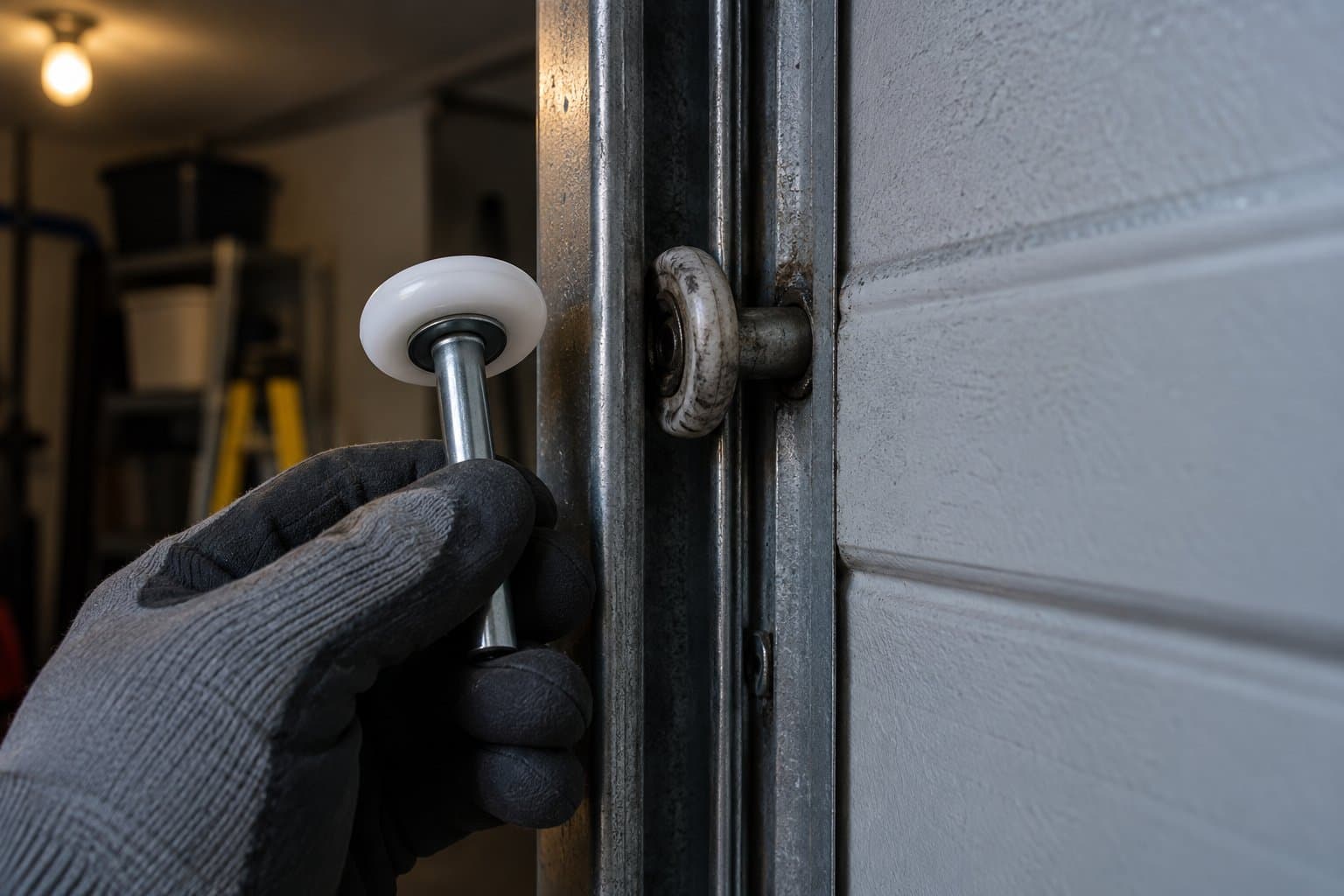
A garage door is heavy, and it moves on rollers, hinges and a shaft every time it opens. Rollers wear out first. Once the nylon or the bearings inside them are worn, they stop rolling and start dragging and rattling in the track. That is the grinding and shaking most people describe.
Hinges and shaft bearings dry out and wear over time. Bolts and brackets work loose from the daily vibration, which adds rattle and lets parts move out of line. If the opener is chain-driven, a chain that is slack or dry can add its own grinding and clatter.
Grease on the track does not help. It collects dust and grit and makes the grinding worse, so leave the track clean. Worn rollers and loose hardware are also what let a door drift off its track later. Dealing with the noise early is usually the simpler repair.
What you can check yourself
- Listen to where it comes fromStand back and listen while the door moves. Noise along the sides points to rollers and tracks. Noise overhead near the opener points to the chain, belt or motor.
- Look at the rollers and hingesFrom the floor, look for rollers that wobble, look flat or cracked, or hinges that look bent or dry. Look only. Do not touch moving parts while the door is in motion.
- Look at the tracksCheck for debris, a visible dent or a track that seems to have shifted away from the wall. A bent track needs a technician.
- Look for a gap in the spring or a loose cableA visible gap in the spring, or a cable hanging loose, means stop using the door. Do not try to fix springs or cables yourself. They hold a great deal of tension.
When to call a technician
Call if the noise began suddenly, if the door shakes hard, looks crooked, or moves unevenly, or if you can see a spring gap, a loose cable or a door out of its track. Stop using the door in those cases. Springs, cables and track hardware are not a homeowner repair. If the grinding is gradual, you can book a visit, but do not wait for it to turn into a door off its track. To set up a visit, call One Call Garage Door at (866) 394-4210. We arrange it with an independent local technician. The estimate is free, and the technician gives you the price in person before any work starts. You approve it first.
Licensing for garage door work varies by state, and in many states it is left to the city or county. The technician holds whatever license their state requires. Your state's contractor licensing board is the place to verify it. A repair like this almost never needs a building permit. A full door replacement can, so ask your local building department before ordering a new door.
What the technician will do
- Find the source of the noiseThe technician inspects the rollers, hinges, shaft, bearings, tracks and opener to see what is actually worn or loose.
- Replace worn rollersWorn rollers are commonly swapped for nylon rollers, which run smoother and quieter in the track.
- Service hinges, bearings and shaftParts that are worn get replaced. The rest are serviced so they turn freely.
- Retighten hardware and restore balanceLoose brackets and bolts are tightened, and the door's balance is checked and restored so it does not strain the opener.
- Quiet the opener where it mattersA chain is tensioned properly. If the opener is near a bedroom or living space, a belt drive can be fitted.
Related questions
- Is it safe to keep using a door that grinds?
- If the grinding is gradual and the door still moves evenly, it is usually safe for a short time. Book the repair rather than letting it run. If the noise is sudden, the door looks crooked, or you see a spring gap or loose cable, stop using it.
- Can I spray grease on the track to quiet it?
- No. Grease on the track attracts dust and grit and tends to make the noise worse. Leave the track clean and have the technician deal with the parts that are wearing.
- Do I need a new door for a grinding noise?
- Usually not. Most grinding comes from rollers, hinges, bearings or loose hardware, all of which can be replaced or serviced. Replacing the whole door is a separate decision, and it may need a permit in some cities and in high-wind coastal areas.
- What decides what the repair will cost?
- The size and weight of the door, which parts are worn, whether those parts are still made, and what the technician finds once they look. The estimate is free, and the technician confirms the price before work starts.
Get a technician out
Free estimate. The price is agreed before the work starts.
Keep reading
Or send us a message
Leave your details and what the door is doing, and someone from the team will call you back.
One Call Garage Door arranges the visit; the technician does the work and gives you the price.