
What does it mean when my garage door hangs crooked in the opening?
A garage door hanging crooked almost always means one side has left its track or lost its lift — the rollers on one edge have jumped the rail, or a cable on that side has snapped and let the door drop. The door is no longer held square and is unstable, so stop using it, keep people and cars out from under it, and do not run the opener again.
Phones answered around the clock · free estimate
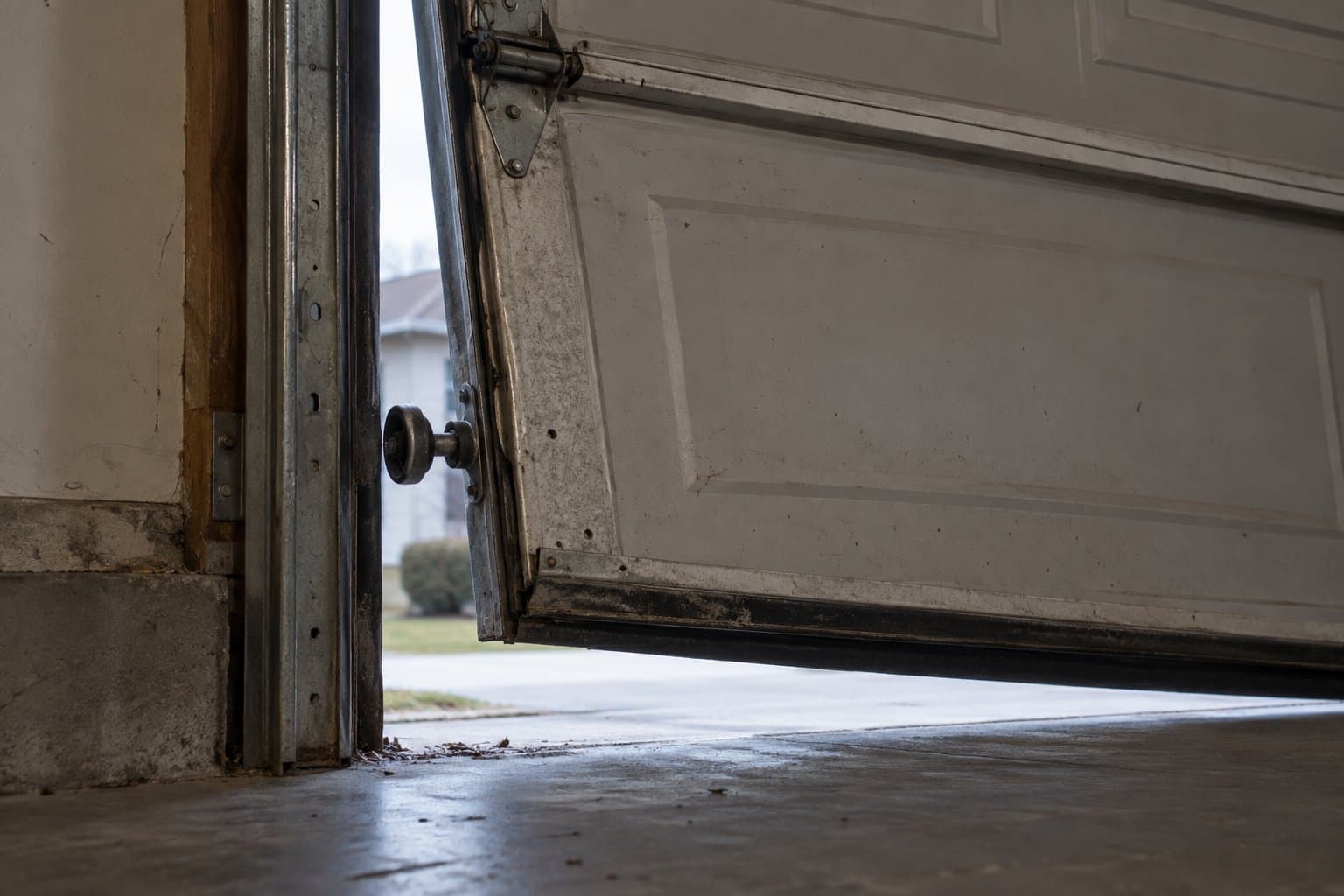
The one thing that changes the answer is which side is low and whether anything is visibly broken. If one bottom corner has dropped and a cable is hanging slack, that is a cable failure. If the top corner is leaning out of the opening and rollers are sitting outside the rail, the door has come off the track. Either way the fix is the same first step: leave it alone until a technician secures it.
Why it happens
Vehicle impact is the most common cause. A bumper tap at low speed is enough to bend a track or shove a panel sideways, and the door looks fine until you open it and the rollers find the damaged spot.
The next most common cause is a snapped cable. The two lift cables share the door's weight evenly. When one lets go, that side falls, the door twists in the opening, and the rollers on the low side pop out of the rail. A worn roller, a loose track bracket, or an obstruction left in the door's path can do the same thing more slowly.
Running the opener on a crooked door is what turns a repair into a replacement. The opener does not know the door is bound up — it keeps pulling, and the force goes into bending track, tearing hinges and creasing panels that were straight a minute earlier.
What you can check yourself
- Unplug the openerPull the opener's plug or switch off its breaker so nobody hits the wall button or a remote by accident. This is the single most useful thing you can do before help arrives.
- Look at both bottom cornersStand back and see which corner sits lower. A low corner with a loose, hanging cable points to a snapped cable rather than a simple derailment.
- Look at where the rollers sitFrom a safe distance, check whether any rollers are outside the track or whether a section of rail is visibly bent or kinked. Do not reach into the track or try to push a roller back in.
- Check for an obvious impact markA scuff, a dent in a panel, or a pushed-in track bracket tells the technician what happened and often explains the whole failure.
- Leave the release cord alonePulling the red manual release on a crooked door can let it drop. If the door is already out of square, leave the cord where it is and let the technician secure the door first.
When to call a technician
A door off its track is past DIY. It is heavy, it is no longer supported evenly, and the spring and cable system is still under load even with the door down. A technician secures the door before touching anything else, which is the part a homeowner cannot safely do alone. We can arrange a visit with an independent local garage door technician — the estimate is free, and the technician looks at the door and gives you the price before any work starts. Call (866) 394-4210.
Repairs like this — track, rollers, cables, springs — almost never need a building permit. Whether the work needs a state contractor license varies by state, and many states leave it to the city or county; the technician holds whatever license their state requires, and your state's contractor licensing board is the place to verify it. If the door turns out to be damaged beyond repair and you replace it, ask your local building department about a permit first, since some cities require one and coastal high-wind areas also require a wind-rated door.
What the technician will do
- Secure the door firstBefore any repair, the door is blocked and supported so it cannot drop or shift while the work is done.
- Replace damaged rollers, hinges and trackBent rail sections, popped rollers and torn hinges are replaced rather than straightened, because a reshaped track derails again.
- Re-string cables and re-seat the drumsIf a cable snapped or unwound off its drum, both cables are set and the drums seated so the two sides lift evenly.
- Re-square and rebalance the doorThe door is brought back to square in the opening and the balance checked so it is not leaning on the opener.
- Cycle testThe door is run through full open and close cycles to confirm it tracks straight and the opener stops and reverses correctly.
Related questions
- Can I just push the door back onto the track myself?
- No. The door is still under spring and cable load, and pushing on it can let it drop or twist further. Leave it supported where it is and have a technician handle it.
- Is a crooked door always a cable problem?
- Not always. Vehicle impact, a bent track, a failed roller or a loose bracket can all throw a door out of square. The technician checks the whole system, since a snapped cable is often a symptom of something else that let go first.
- Will the whole door need replacing?
- Often not. If the panels are straight and only track, rollers and cables are damaged, those parts are replaced. Badly creased panels or a door whose parts are no longer made are the cases where replacement comes up.
- What does this kind of repair cost?
- It depends on the door's size and weight, which parts failed, whether panels are damaged, how accessible the tracks are, and what the technician finds once the door is secured. The estimate is free and the price is given in person, before any work starts, for you to approve.
- Can I use the garage in the meantime?
- Park outside and keep the door closed and the opener unplugged. If a car is shut inside, mention that when you call so the technician knows the door has to be opened safely by hand.
Get a technician out
Free estimate. The price is agreed before the work starts.
Keep reading
Or send us a message
Leave your details and what the door is doing, and someone from the team will call you back.
One Call Garage Door arranges the visit; the technician does the work and gives you the price.