
What does it mean when my garage door reverses partway down every time?
It means the opener thinks something is in the way and backs the door up as a safety response. The cause is usually one of two things: the safety sensors near the floor are blocked or out of line, or the door is binding or out of balance, so the opener feels resistance and reads it as an obstruction.
Phones answered around the clock · free estimate
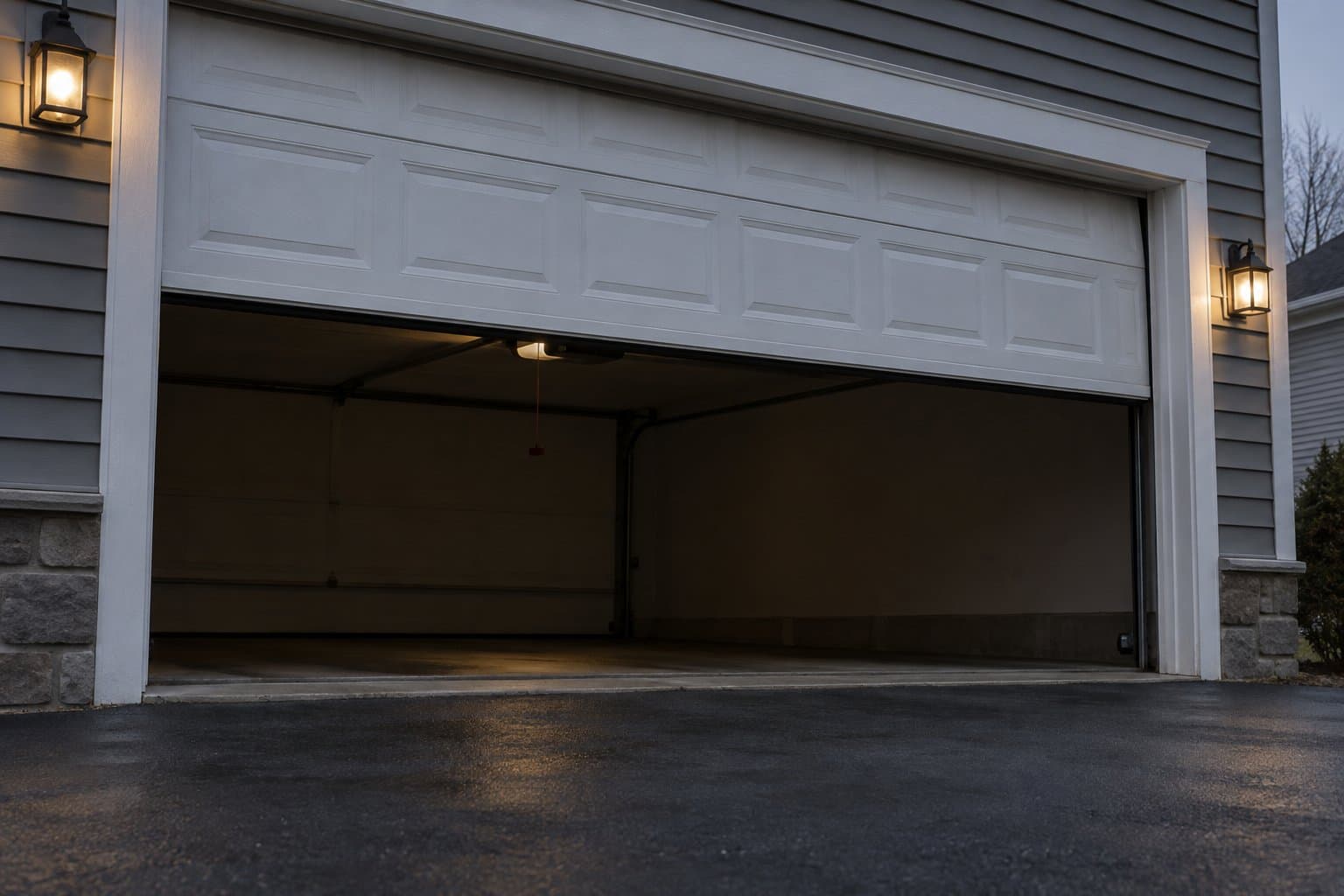
Where the door reverses helps narrow it down. If it reverses just before it touches the floor, the opener's travel or force settings are the likely cause. If it reverses higher up, look at the sensors and at how freely the door moves in its track.
Why it happens
Every opener has two safety checks. The first is a pair of sensors, one on each side of the door near the floor, with an invisible beam between them. If the beam is broken or the sensors no longer face each other, the door reverses. A bumped bracket, a dirty lens, or a box left in the path can all do it.
The second check is force. The opener measures how hard it has to work to pull the door down. A healthy door is balanced by its springs and rolls easily, so the opener barely strains. If a spring has weakened, a roller has seized, or the track is bent or dirty, the door gets heavy or sticks. The opener senses the extra load and reverses.
That second cause matters because the door itself is the problem, not the opener. Turning the force up to get past it only hides the fault, and it can leave the door pushing harder against whatever is wrong. Repeated cycling can also bend the track further. A door that reverses and stops partway, then will not move either way, is a stuck-half-open door. Treat it with the same caution.
What you can check yourself
- Look at the sensor lightsEach sensor usually has a small indicator light. If one is off, blinking, or dim, the sensors are probably misaligned or something is blocking them.
- Clear and wipe the sensorsRemove anything in the beam's path and wipe each lens with a soft cloth. Check that neither sensor looks knocked sideways or loose on its bracket.
- Look along the tracksFrom the side, look for debris, a visible bend, or a roller that has slipped out of place. Do not tap or push the track back into shape.
- Look at the springs and cablesLook for a visible gap in the spring or a cable hanging loose. If you see either, stop using the door. Do not touch the spring, the cables, or the brackets they connect to.
- Watch where it reversesNote whether it backs up at the same spot every time, and whether it makes a scraping or straining noise first. This helps the technician narrow it down.
When to call a technician
If the sensors are clean, the lights look normal, and the door still reverses, the cause is likely in the door's balance or travel. Springs, cables, rollers, and opener settings are work for a garage door technician. Springs and cables are under high tension and are not a homeowner repair. Stop using the door if it looks uneven, scrapes, or hangs partly open, and keep people and cars out from under it. If you would like help, call One Call Garage Door at (866) 394-4210 and we will arrange a visit with an independent local technician. The estimate is free.
Licensing rules for garage door work vary by state, and many states leave them to the city or county. The technician holds whatever license their state requires, and your state's contractor licensing board is the place to verify it. A repair like this almost never needs a building permit. Your local building department can confirm if you are unsure.
What the technician will do
- Secure the door firstIf the door is stuck partway, the technician makes it safe before anything else, so nobody is working or standing under it.
- Check the door as a systemThe springs, cables, rollers, and track are inspected together, because a fault in one often shows up as a problem in another.
- Restore balanceThe door should hold itself partway up without the opener. If it does not, the technician corrects the cause.
- Reset opener travel and forceOnce the door moves freely, the technician sets the opener's travel and force so it closes fully and still reverses when it should.
- Give the price before work startsThe technician looks at the door, gives you the price in person, and you approve it before any work begins.
Related questions
- Is it safe to keep using the door if it reverses?
- If the cause is a blocked sensor, it is working as designed and clearing the obstruction fixes it. If the door also scrapes, hangs crooked, or looks uneven, stop using it. Repeated tries can bend the track and make the repair bigger.
- Can I just turn up the opener's force setting?
- That is not a good fix. If the door is binding or out of balance, more force hides the symptom and strains the door and opener. The safety reversal is also there to protect people and property, so it should be set correctly by a technician.
- What decides the cost of fixing this?
- It depends on which part is at fault, the size and weight of the door, whether replacement parts are still made, and what the technician finds on inspection. A sensor realignment and a worn spring are very different jobs. The estimate is free, and the price is confirmed before any work starts.
- Will the door stay open while it waits for repair?
- If it is stuck partway, the garage is open, which is a security concern and, in bad weather, a water problem. Do not reach or stand under the door. Tell the technician when you call so securing it can be the first step.
Get a technician out
Free estimate. The price is agreed before the work starts.
Keep reading
- The problemThe door is stuck half open
- AnswerWhy does my garage door stop halfway and refuse to move up or down?
- AnswerWhat does it mean when the opener motor runs but the garage door does not move?
- AnswerWhat does it mean when my garage door hangs crooked in the opening?
- Every question we have answered
Or send us a message
Leave your details and what the door is doing, and someone from the team will call you back.
One Call Garage Door arranges the visit; the technician does the work and gives you the price.