
Why is my garage door suddenly so loud and shaking when it opens?
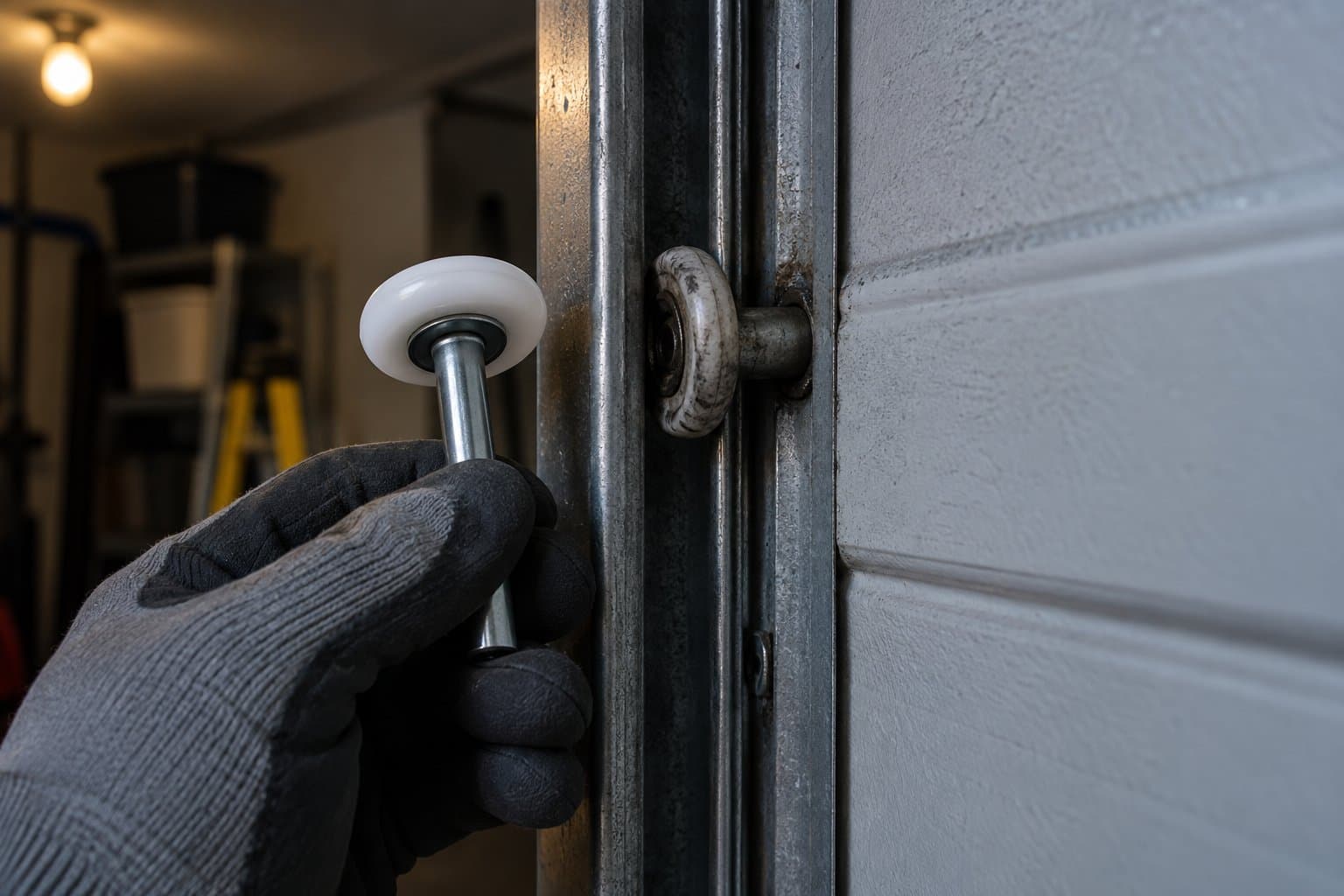
A door that has suddenly become loud and shaky is almost always telling you that the rollers are worn out, the hardware has rattled loose, or the door is no longer balanced on its springs. Those three things make the door move unevenly instead of gliding, and every panel and hinge rattles as it travels.
Phones answered around the clock · free estimate
There is one important distinction. A rumble that has crept up over months is wear. A single new bang, scrape or pop that appeared out of nowhere is different — stop using the door and have it looked at before you run it again, because that sound can come from a spring, a cable or a bracket that has let go.
Why it happens
Rollers carry the whole door through the track. Steel rollers with worn bearings stop rolling and start skidding, which is where the grinding and the side-to-side shake come from. Nylon rollers run quieter and are the usual fix.
A garage door opens and closes thousands of times. Every one of those cycles vibrates the hinges, the track brackets and the opener rail. Bolts back off a little at a time until the door has play in it, and then it slaps and rattles on the way up.
Balance matters too. The springs are meant to carry the door's weight so the opener only guides it. When the springs weaken, the opener drags the door instead, and you hear the strain and feel the shudder. A loose chain on a chain-drive opener adds its own slap at the start and stop of each run.
Noise is the cheap stage of a problem. Worn rollers and loose hardware are what put doors off their track later, so it is worth dealing with while it is still only a noise.
What you can check yourself
- Look at the rollersWith the door closed, look at the roller wheels in the track. Flat spots, wobble, chipped nylon or a wheel that is not turning as the door moves all point to roller wear.
- Listen for where the noise startsStand clear and listen. Noise at the very start of travel often means the opener or chain; noise all the way up the track usually means rollers and hardware.
- Look for a gap in a springFrom the floor, look at the spring above the door or along the side. A visible gap in the coil means a broken spring — stop using the door and do not pull the release cord or try to lift it.
- Check for a loose or hanging cableA cable that has gone slack, frayed or come off its drum is a stop sign. Leave the door alone and have a technician handle it.
- Skip the greaseDo not grease the track. Grease collects grit and makes the grinding worse; tracks are meant to stay clean and dry.
When to call a technician
Call when the noise came on suddenly, when the door shudders hard enough to shake the opener rail, when you can see a gap in a spring or a loose cable, or when the door no longer sits square in the opening. Springs, cables and drums are under high tension and are not homeowner work.
A repair like this almost never needs a building permit — permits usually come up on a full door replacement, and in some coastal high-wind areas the new door has to carry a wind rating. Your local building department decides that. Licensing rules vary by state and sometimes by city; the technician holds whatever license their state requires, and your state's contractor licensing board is the place to verify it. One Call Garage Door arranges the visit with an independent local technician — the estimate is free and the price is confirmed before any work starts. Call (866) 394-4210.
What the technician will do
- Replace the rollersWorn steel rollers are swapped for nylon, which is the single biggest change most homeowners hear.
- Service hinges, bearings and the shaftHinges, end bearings and the torsion shaft are checked and serviced so the door stops binding as it travels.
- Retighten the hardwareTrack brackets, hinge bolts and the opener rail are gone back over and tightened so the play comes out of the door.
- Restore the balanceThe door is checked against its springs so the opener guides the weight instead of dragging it.
- Tension the chain or fit a belt driveA slack chain gets tensioned. Where quiet really matters — a bedroom over the garage — a belt-drive opener is an option.
Related questions
- Can I just oil the door to quiet it down?
- A light lubricant on hinges and springs can help a little, but it will not fix worn rollers or loose bolts. Never grease the track — it traps grit and speeds up the wear.
- Is a noisy door dangerous to keep using?
- Gradual rumble is wear and gives you time to get it looked at. A new bang, scrape or pop, a visible gap in a spring, or a slack cable means stop using the door until a technician has seen it.
- Will a new opener make the door quiet?
- Only if the opener is the noisy part. If the rollers and hardware are worn, a new opener will move a rattling door more quietly but the door itself will still shake.
- What does the repair cost?
- It depends on the size and weight of the door, which parts are worn, how many rollers and hinges are involved, and what the technician finds once the door is up on the track. The estimate is free and the price is given in person before any work begins.
Get a technician out
Free estimate. The price is agreed before the work starts.
Keep reading
- The problemThe door has become loud, grinding or shaky
- AnswerWhy is my garage door shaking after I backed into the bottom panel?
- AnswerWhy is my garage door crooked with one side higher than the other?
- AnswerWhy does my garage door stop halfway and refuse to move up or down?
- Every question we have answered
Or send us a message
Leave your details and what the door is doing, and someone from the team will call you back.
One Call Garage Door arranges the visit; the technician does the work and gives you the price.